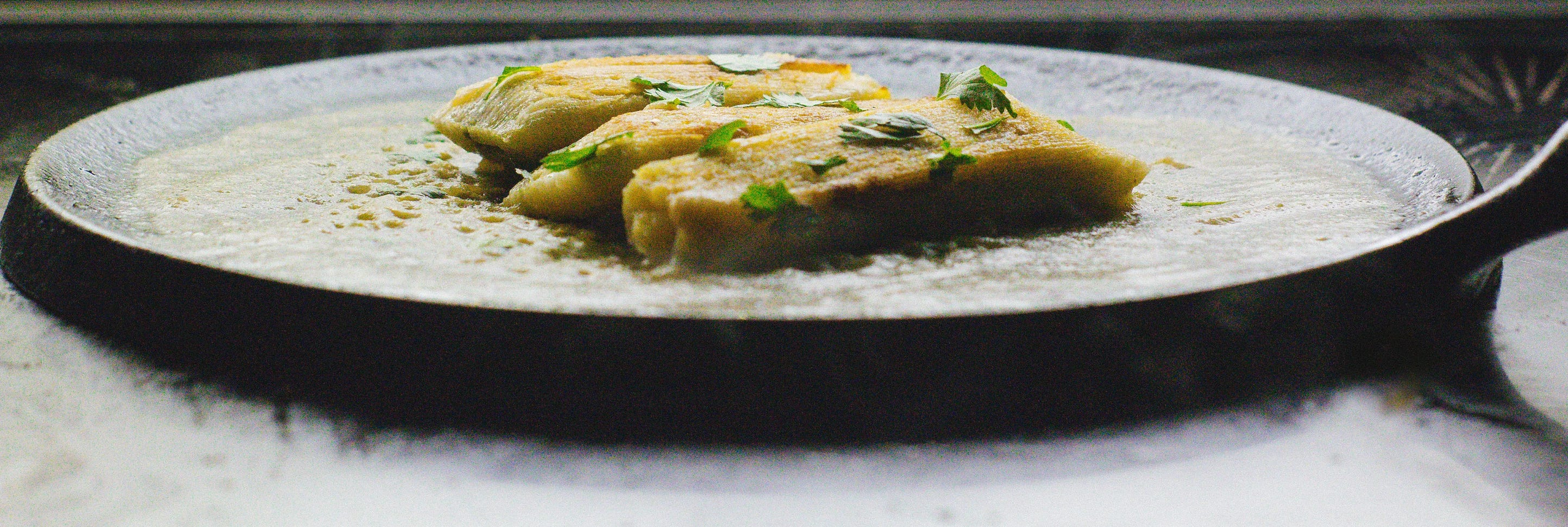
I am sending a note of gratitude to all my faithful readers on this Christmas Eve, what would have been my abuelita’s 102nd birthday. This is a draft book excerpt that I’m giving to all readers as a taste of what is to come in 2024 (usually only for paid subscribers).
I’m so grateful for this space to write and reflect on decolonizing. And I’m grateful for everyone that sends me words of encouragement to keep going. I hope in 2024 we can continue to be a light for each other in these difficult times.
Pssst… I’ve modified the subscription so that new paid subscribers will have access to these excerpts and an online collective to share your reflections on decolonizing (for as little as $4.90/month or $49/year).
This excerpt is too long for many email providers and will get cut off. To read the full article and share your ancestral foods click here.
Gentle Nudge — these offerings are available for the next few days:
Center Passion And Flow In 2024 With Boundless Vision
Befriend Time, Liberate Your Flow And Center Your Revolutionary Body Of Work So You Can Live In Rhythm And Flow With The Cosmos…
Boundless Vision Retreat, December 30th, 9am – 1pm PT
🔮✨💫🔮✨💫🔮✨💫🔮✨💫🔮✨💫
Revolutionize your relationship with Time and the Cosmos through Ixchel’s embodied approach and guidance to Decolonizing Astrology and Human Design. Book a 2-hour reading or get ongoing astrological mentorship (save $222 through New Year’s Eve).
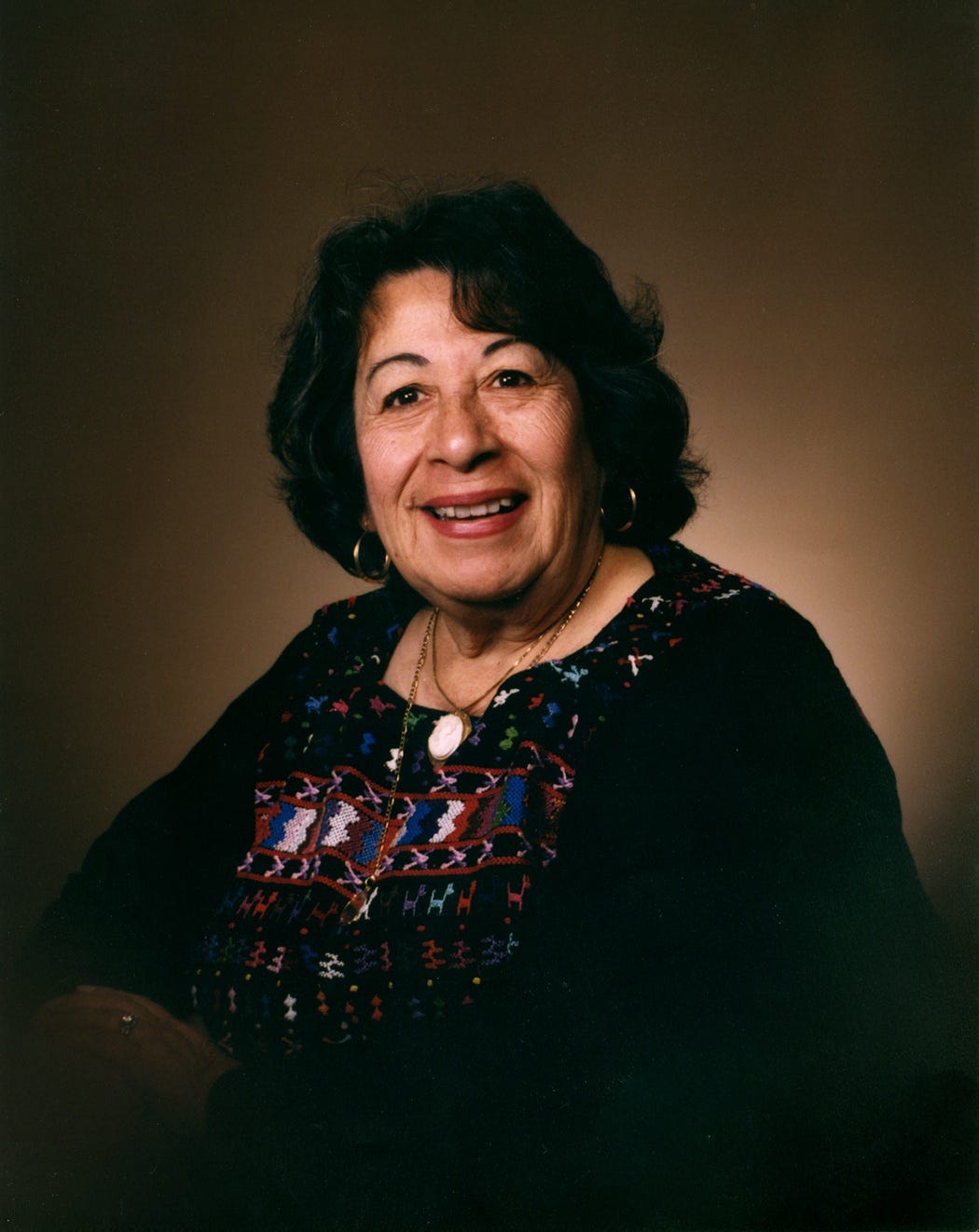
Beatriz Dolores Withrow de Lunar was known affectionately as Grandma Bea, Tia Bea and Nina Bea to her family and community. A woman with tireless curiosity and zest for life, my abuelita was both the classic grandmother archetype — nurturing and safe — and a fiercely independent spirit and activist within her community.
The Withrow home saw generations of sons, daughters, and grandchildren grow up within its walls, guided and counseled by Bea’s generous spirit. She was a philosopher, an organizer, firmly walking her own spiritual path and, together with husband Jack, became an adopted mother to people from around the world — including Mexico, Costa Rica, Nicaragua, El Salvador, Chile, and Japan.
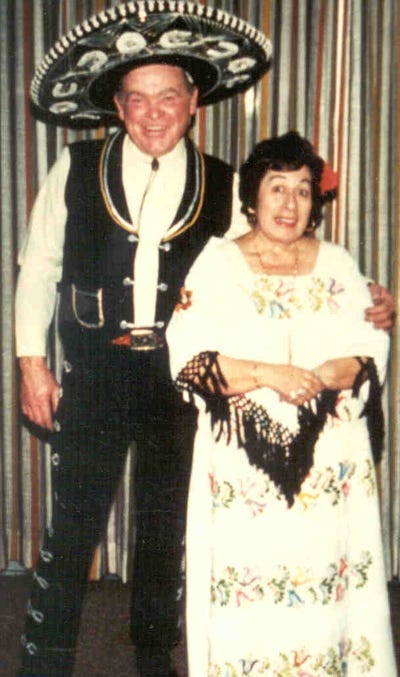
Bea and Jack’s home was a center for birthing community-affirming action as well as rich traditions and rituals throughout the year. Halloween and Christmas Eve parties, summer barbecues, and the annual Tamale Day became legendary among Bea’s family and friends, each event drawing a diverse slice of the human community to the Withrow home for the purpose of celebrating life and each other.
Bea transcended and reshaped how family and community were defined in her corner of the world. America is and should be a nation that celebrates its diversity and nurtures its children beyond borders. Bea’s life was made richer by her intention of celebrating all people. Her commitment to loving and understanding people unconditionally changed how many of us define what family is — an exchange of loving kindness and support beyond a traditional lineage of bloodlines. The lines separating community and family vanished in her presence. She was a true American.
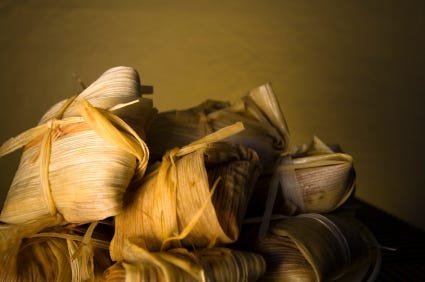
Tamale Day is an annual tradition in our family. Once a year, usually before the Thanksgiving and Christmas holidays we gather together to make hundreds of tamales for our holiday meals and winter freezers. Tamales are a Latin-American food made from a favorite meat or vegetable filling wrapped in corn flour dough called masa and steamed in corn or banana leaves. Just like you can tell the origin of a huipil (the traditional woven top in Meso America) by the geometric style and colors, you can tell the origin of a tamale by its taste and outer leaves.
Tamale making is quite a fun and joyous production that takes days to organize. To make the masa we used fresh-milled, organic corn flour combined with water, lime for nixtamalization (calcium hydroxide), salt and a fat of choice (lard, olive oil, butter, etc.). Everyone brings a pressure cooker, tubs for the masa preparation, their favorite spreaders to spread masa over clean, moistened ojas (dried corn husks or banana leaves), and lots of tea towels.
All our extended family and friends came with their favorite tamale fillings. The living room was set with several long folding tables set about in a circle with chairs. We put moving blankets under them to keep the carpets clean as masa inevitably finds its way to the floor. Everyone set up around the table. We mixed the masa to spec for each family, using their favorite fat, maybe chile sauce for color. The key was getting a dab of masa to float in a cup of water. Tamales are basically a vehicle for fat consumption, flavored by the filling.
‘Mixing the masa’ became a metaphor for doing something difficult that needs to be done before you can proceed any further.
Depending on the family, the pre-cooked filling of chile con pollo, res, or cerdo (chicken, beef or pork), or chile verde or a mix of fresh vegetables and black beans (the penultimate indigenous style) was set out to begin filling the masa-covered ojas (corn husk or banana leaves). The spread must be calibrated to just the right thick or thin or medium preference of the family whose turn it is. Then the masa-covered ojas are gathered and set next to them to be filled. The spread was important as it determines how many tamales they got to bring home. Usually the yield was about 10–12 tamales per pound of masa ordered. We typically ordered between 75–100 pounds of unprepared wet masa. That’s a lot of tamales!
The first Tamale Day after my dad, Bill, was murdered in 1988 we ended up with dozens of extra tamales. Grandma Bea was putting the bags of cooled tamales in the extra freezer outside, when she called me over to help her. They weren’t all fitting. She started crying when she realized she had forgotten how many tamales my dad would have taken to give as gifts to clients and friends.
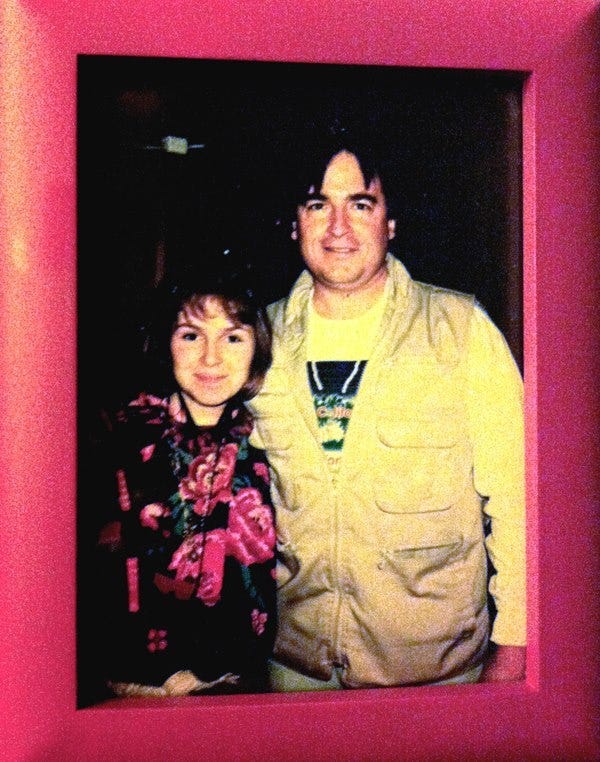
Bill Withrow was a pillar in the community as real estate broker and honorary Mayor of Fair Oaks, California. Eventually he started a bank and was the founding Chairman of the Board of American River Bank (a fact the bank failed to acknowledge), now owned by Bank of Marin.
Bill lived in a white, affluent world selling luxury real estate and developing track homes. But even though he was raised to assimilate into “the melting pot” of American culture (which is a myth), forgetting his Spanish, he never forgot his roots.
Instead of Italian loafers with his business suits, he wore custom, handcrafted crocodile leather cowboy boots. After the Vietnam war, he returned home a broken man — determined to re-member himself. He became the youngest real estate broker in California. And every year Dad would give dozens of tamales away to his clients as a subtle showing of who he was, a machismo. He adored his mother, and it showed in his generous nature.
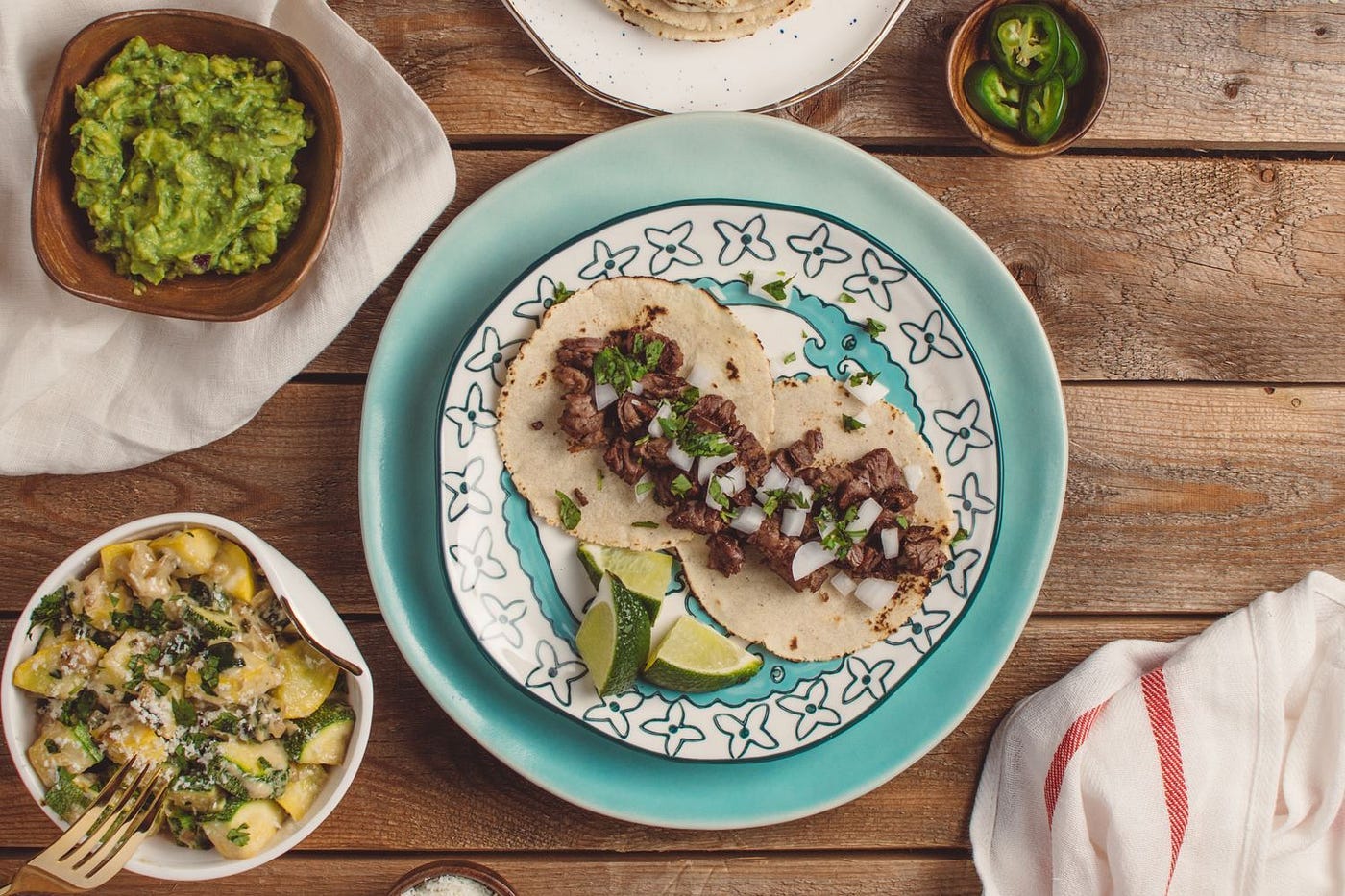
Gathering together to make the tamales makes the hard work go faster. We get into flow doing it, listening to music, laughing, taking dance breaks, and yes, there was usually alcohol involved (and so, typically, some drama unfolds). But at the beginning of the day, we were led by our matriarch, Grandma Bea, to re-member where we came from, the importance of of making this traditional food that has kept our families alive for generations, and give thanks to our ancestors for their resilience that we are alive in this time.
In the Americas there are many ancestral foods that connect our families back to our origin and resilience story. For the northern ancestors there is seal hunting. For the west, salmon fishing. For the east, lobster and elk. For the south, milpa or abix — the growing of three sisters: corn, squash, and beans.
Eating is a very political act. The next meal you have, stop and look at your plate. What’s on it? Depending on where you live, what is on your plate can tell you a great deal about your underlying political views. Most of it is likely very unconscious eating. We are controlled, in large part, through the foods we buy and consume.
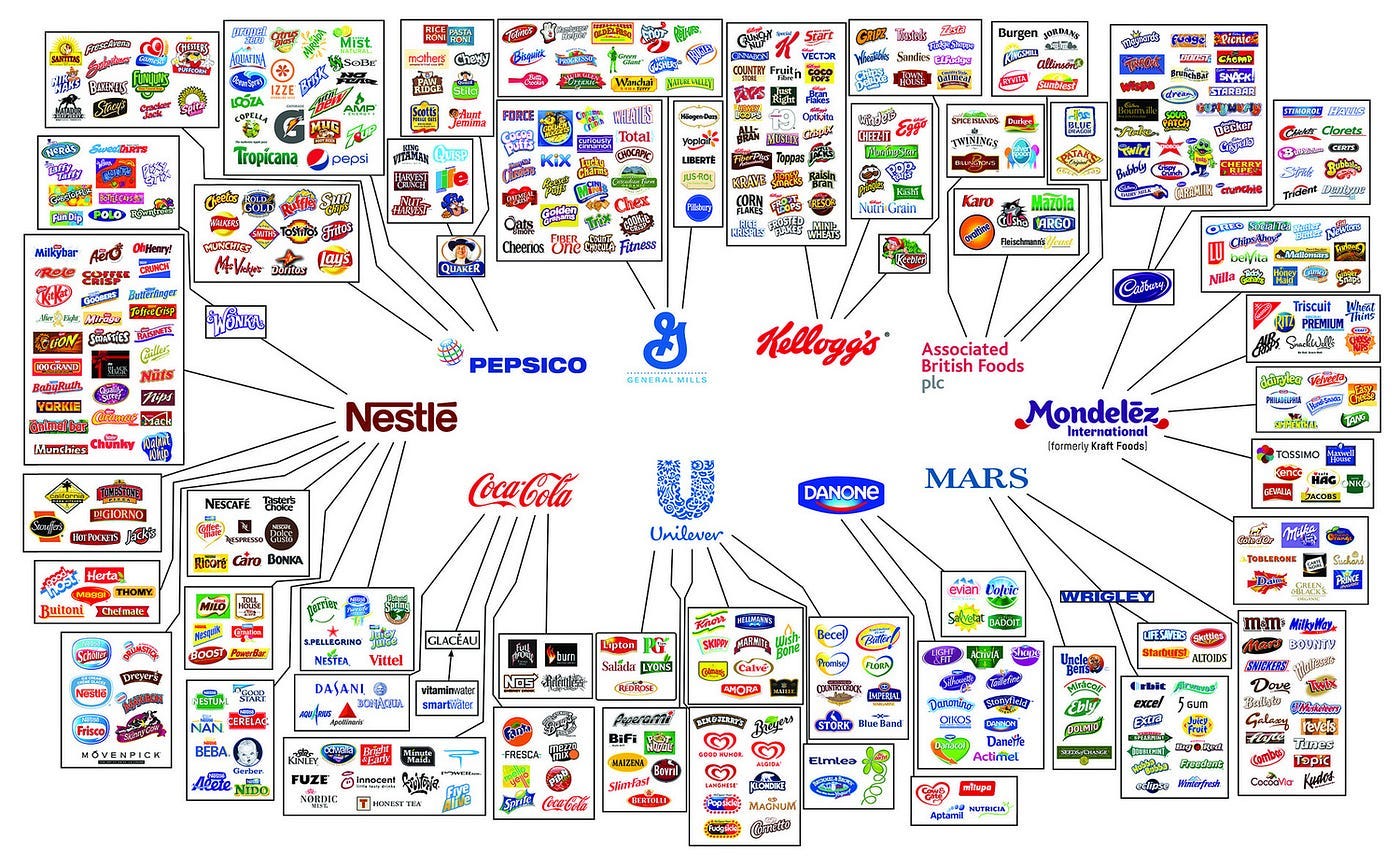
Because the world’s food is mostly produced by 10 conglomerates, food policy is developed by these corporations that take your money and use it to pay lobbyists to write and influence food laws. Whether you are aware of it or not, your food purchasing is having a significant impact on the planet. And you can make small shifts to improve the planet by what you choose to eat.
For mindful, ecological eating movements much attention has been given to food miles (how far away your food traveled to arrive at your plate), the type of food energy (whether it’s glycemic or ketogenic), or to the ethical nature of how it was produced (factory or organic). Not much focus has been put on the politics of what we eat, until recently.
As we take off the lid of our food pot and begin to see it’s devastating socio-political, economic, and environmental consequences — we cannot have a real food revolution without discussing the embedded colonialism (aka indigenous genocide) present on our plates. Colonialism is probably too polite a word, but since I’m partly French-Canadian, I’ll stick with that so you’ll keep reading.
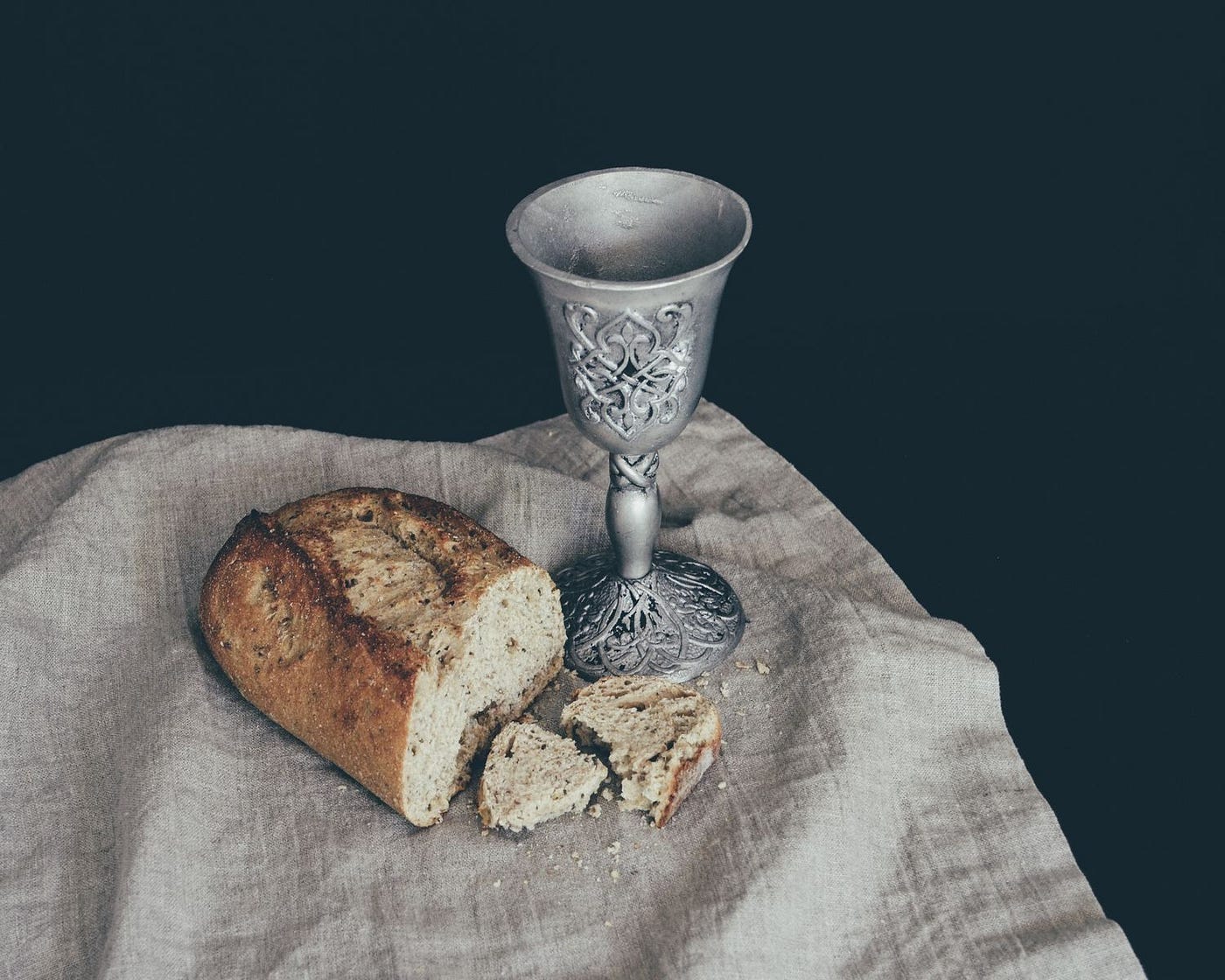
When the Spanish conquistadors arrived in the Americas, they brought with them a set of food values that significantly shaped their socio-economic religious status in the world. Over the last 500 years, that policy has shaped the world’s food production.
The Spanish diet was based in Catholic connection to Christ through bread and wine which dates back to the Roman Legions. Specifically, wheat and grapes were used to keep soldiers in line. Literally, these foods shape how our brains function through neuro-chemicals like dopamine. When the conquistadors arrived in the Americas and found these foods did not exist, they brought wheat, grapes and other colonial foods with them because eating indigenous foods was seen as beneath them. Like most conscious eaters, the Spanish believed that what they ate created who they were. We are what we eat.
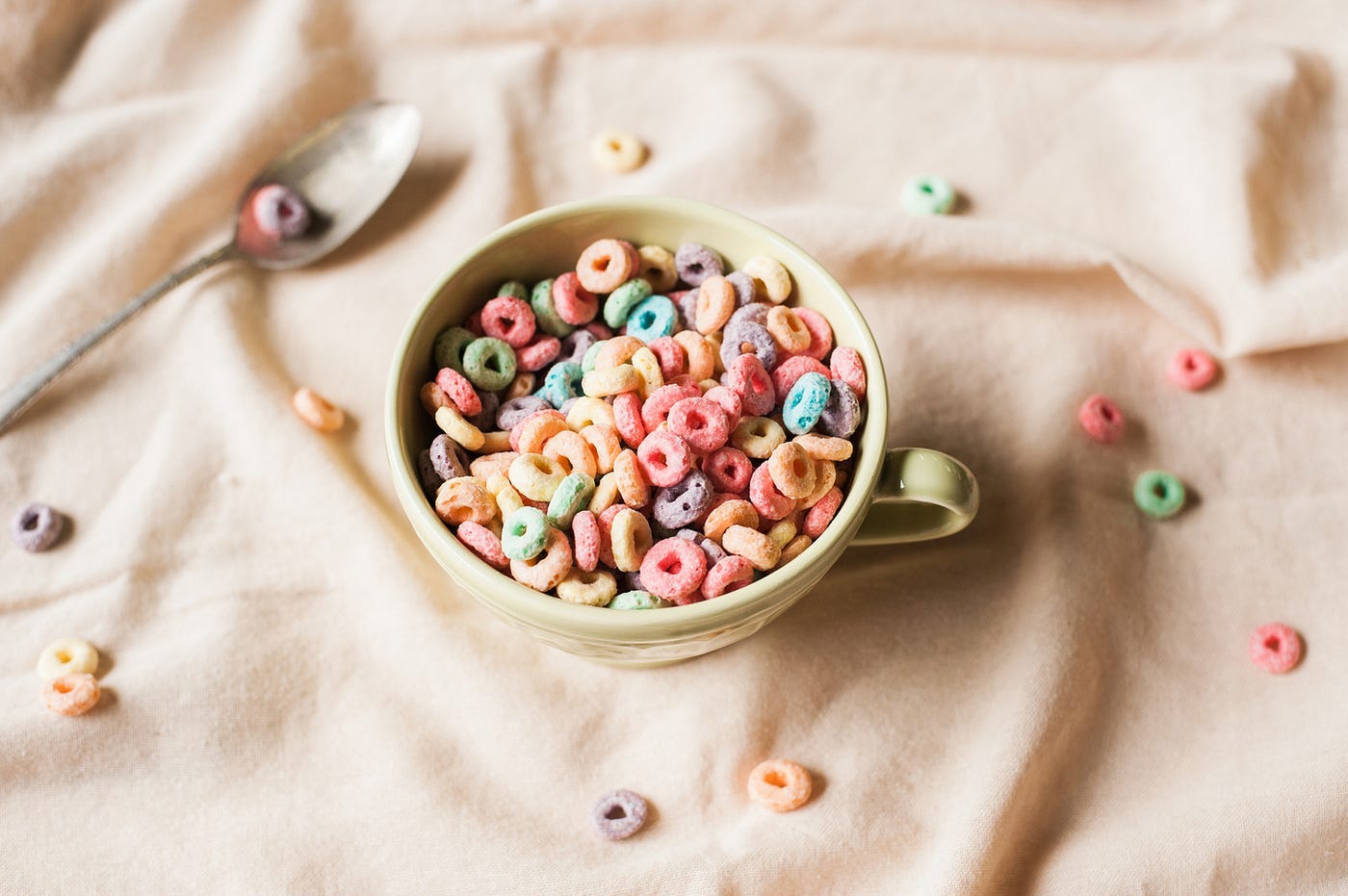
A huge yagrumo hembra (cecropia) tree stands in our garden at our former bee sanctuary in Matagalpa, Nicaragua. Loving named my “dancing tree,” this tree feeds many forest creatures from its leaves, fruits and seeds, including many colorful toucans. Whether the fabled cereal Froot Loops and Toucan Sam is a acculturation or appropriation of the yagrumo hembra tree and its inhabitants is not known. But the similarities and friends of Toucan Sam throughout the decades of this commercial series appear to use many Latin American creatures to sell their cereals.
Cereals were not traditionally part of the indigenous diet of Latin America. Lactose malabsorption is a hidden but wide-spread issue in the diets of Latin Americans due to the introduction of cereal and milk. Grains were not an evolutionary adapted food source, making food allergens a hidden epidemic among Latin Americans. Of those with celiac genetic markers (gluten intolerance as an autoimmune response), a significant portion of Latin Americans — including myself in this category — are also allergic to oats, another grain not found in the Americas.
“Food is not just calories, it is information. It talks to your DNA and tells it what to do. The most powerful tool to change your health, environment and entire world is your fork.”
~Dr. Mark Hyman [italics mine]
Eating foods that cause inflammatory allergic or autoimmune response, also weakens the immune system, which in turn made indigenous populations — forced by the conquistadors and missionaries to eat the old world grains — more susceptible to European viruses and disease like diabetes. So, when I visited Nicaragua for the first time, exploring what city we would eventually move to, I was shocked to enter the local tiendas and grocery stores to see shelves stocked with massive amounts of packaged foods produced by the conglomerates. Ironically, one of the grocery stores, something that didn’t exist here a decade ago, is named La Colonia. Truth in advertising…
Using jungle animals to sell cereal (a colonial staple) isn’t limited to Froot Loops. In a very bold move to combat childhood obesity, the government of the South American country of Chile banned Tony the Tiger, Cheetos Chester Cheetah and other uses of mascots that use cartoons to sell junk food to children. And in Malaysia, the Nestle drink Milo is facing similar backlash for being marketed as a health drink for athletes and children while it contains 40% sugar in a wheat or barley malt and chocolate powder.
Many Asian and Latin American countries are fighting huge rates of nutritional illnesses — from diabetes, chronic infections, to behavioral and mental illnesses — from the oversaturation of these colonial foods that use cartoon characters to instill an addiction to grains and sugars. They market these genocidal chemical concoctions — I mean colonial foods — as cereal to children and alcohol to adults.
And so, the process of re-membering who we are through our traditions requires revisiting our indigenous foods and how they were eaten by our well ancestors. As Dr. Mark Hyman states in the above quote, our ancestral foods act as information to our bodies and our genetic code. But to truly shake off colonialism and the destructive food policies that follow its dictates, it necessitates letting go of eating the foods of the once colonizers and current food conglomerates.
Strides are being made to reduce colonial food marketing in many places around the world. But these steps are being fought by the conglomerates in international court. The subtle genocide continues, bolstered by international laws that protect the 1%. And while market regulations can inspire dialogue, a real food revolution requires waking up to what oppresses us and choosing to eat healthier as an act of breaking the chains of enslavement of food used as a weapon and a control device. We hold our own freedom in our hands, on our plates.
The implications of the foods we eat, the policies that support industrial food production and marketing, the very dietary guidelines that conglomerates write into public policy to advance the idea of certain types of food being necessary for a full nutrient profile, all hinge on our participation. Change happens as we examine the foods we buy, read the ingredients, and consider the overall message of the packaging (the slick, manipulative marketing campaigns behind the products), much of which has been predicated on creating emotional lack that could only be filled through eating.
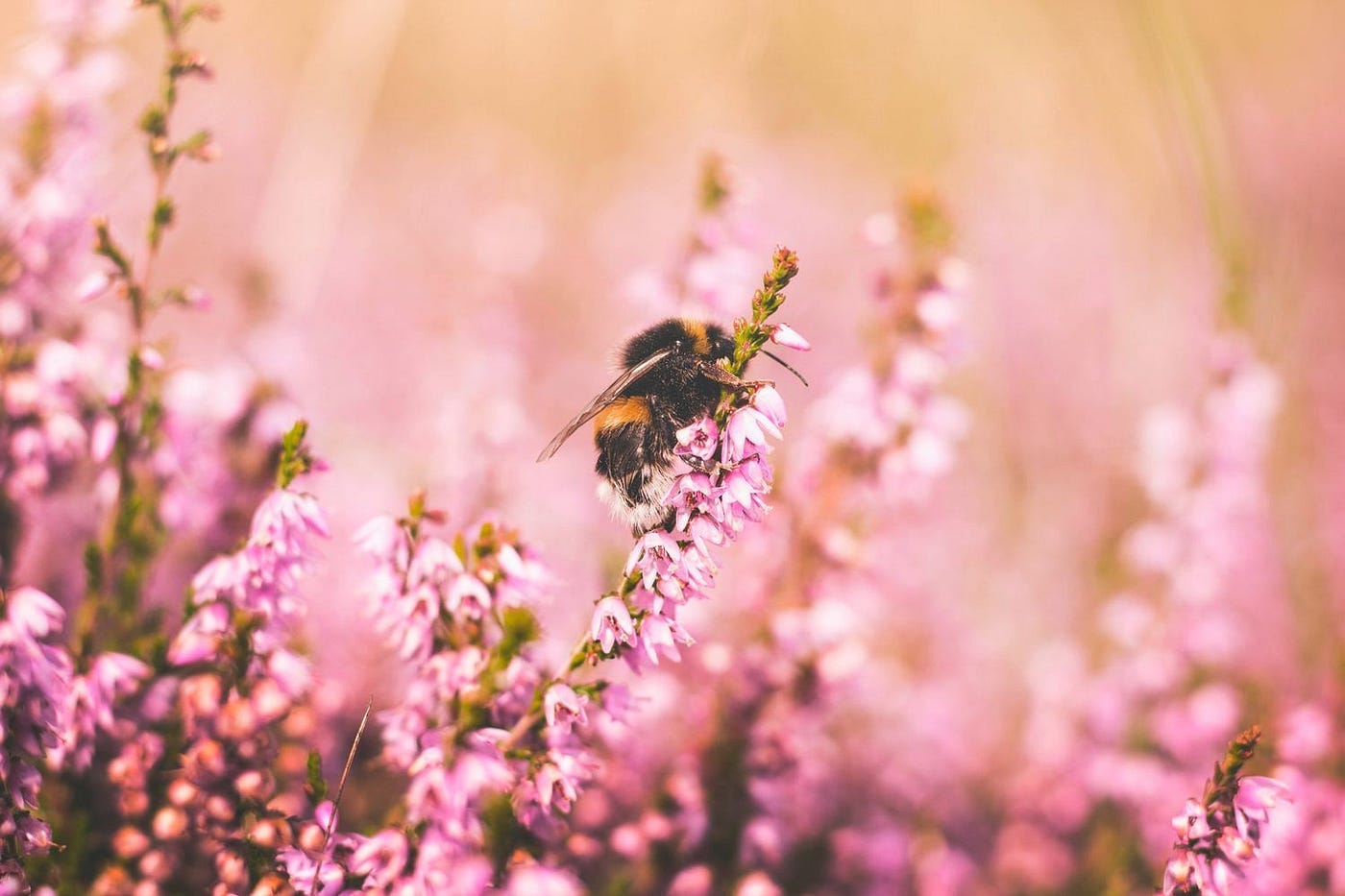
The climate chaos developed in part through our staples… grain (typically genetically-modified) and sugar-based colonial foods grown in mega industrial farms. These crops are fertilized with antibiotic chemicals like glyphosate which are killing our world’s pollinators. The crops are planted and harvested with petroleum-based machinery which destroys the top soil, releasing methane (a leading cause of climate change). Then the crops are trucked thousands of miles using diesel fuel to be milled and produced in giant factories, and then packaged in plastic and shipped around the world to a store near you.
A real food revolution includes returning to our ancestral diet, the hand-grown, handmade foods that kept us whole and alive for millennia. However, an ancestral diet isn’t just for the first people of the Americas, the colonial diet is a worldwide epidemic that is at the heart of climate chaos.
The milpa or abix system of agriculture, an ancient method practiced by the Mayab (Mayan people), represents a profound connection to the land and a sustainable approach to farming. This system, deeply rooted in the cultural and spiritual beliefs of the Maya, emphasizes a harmonious relationship with nature.
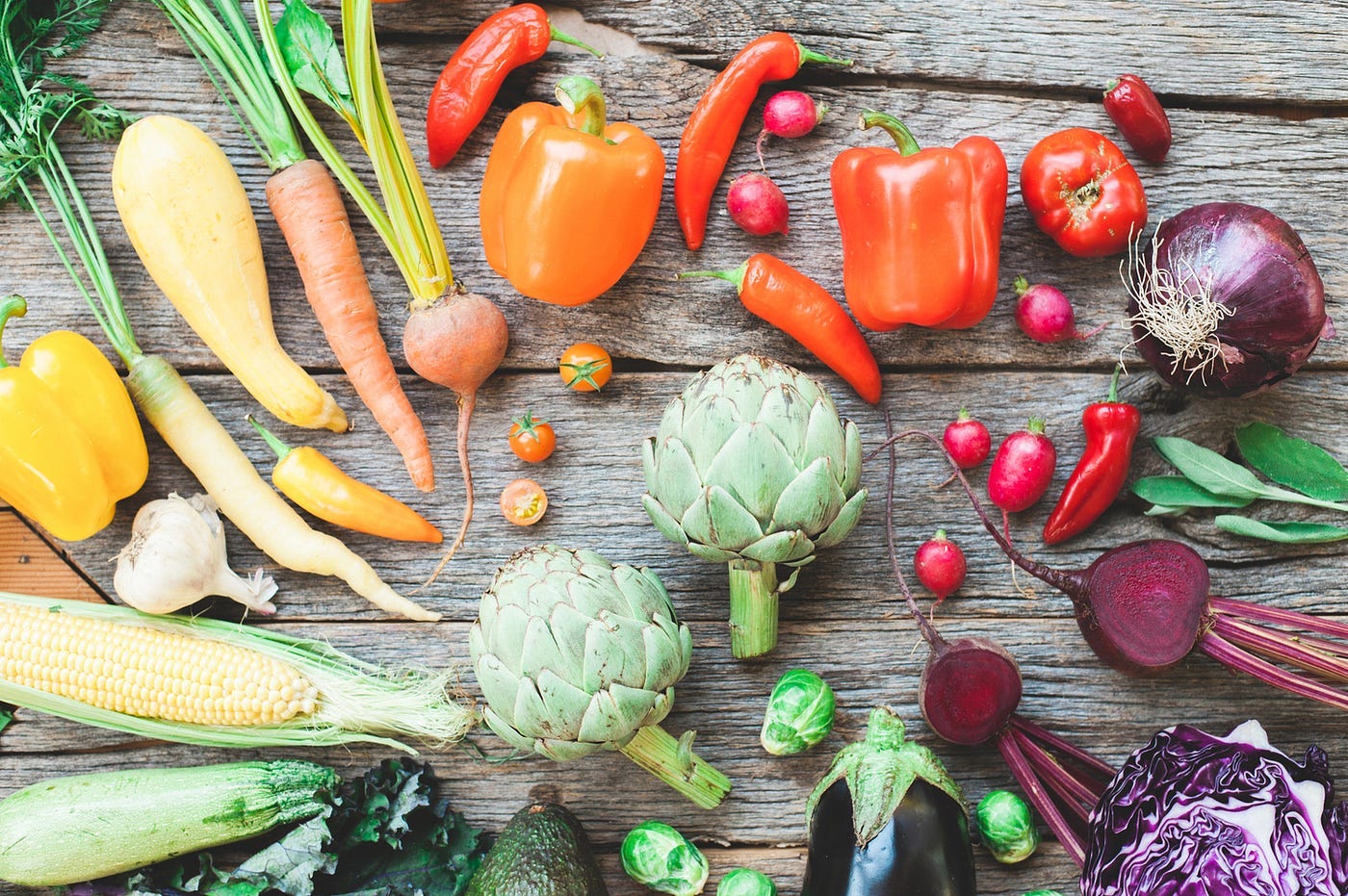
It involves a sophisticated method of crop rotation and polyculture, where multiple types of crops are grown together to enhance soil fertility and reduce pests and diseases. This method contrasts sharply with modern monoculture practices, which often lead to soil depletion and increased reliance on chemical inputs. The abix system showcases the Mayans’ deep understanding of ecological balance and their ability to cultivate a diverse array of crops, including maize, beans, squash, herbs, and chili peppers, in a way that supported both their community and the environment.

Reindigenizing our food system through practices like the Mayan abix method is a powerful step towards decolonizing our relationship with agriculture. This approach involves reviving and embracing indigenous agricultural practices that have been marginalized or forgotten due to the spread of industrial farming methods.
By reindigenizing, we acknowledge the wisdom and effectiveness of traditional agricultural practices that have been honed over centuries. These practices are not only sustainable but also resilient, fostering biodiversity and helping communities become more self-reliant. Reindigenizing agriculture encourages a shift away from extractive and exploitative farming methods towards more holistic, community-centered approaches.
Decolonizing our food system through the adoption of methods like the Mayan abix system involves a deeper understanding and respect for the land and its natural cycles. It’s about moving away from the industrialized, profit-driven approach to agriculture that often disregards environmental health and community well-being. Decolonization in this context means recognizing and valuing the knowledge and practices of indigenous peoples, who have long cultivated the land in a way that is both sustainable and respectful. It’s about learning from these practices and integrating them into modern agriculture to create a more equitable and sustainable food system.

Connecting to the land and our ancestors through agricultural practices like the Mayan abix system is a spiritual and cultural journey. It’s about understanding the land not just as a resource, but as a living entity with which we have a reciprocal relationship. This connection is deeply rooted in many indigenous cultures, where farming is not just about food production but is also a cultural and spiritual act. We are made from corn. By adopting these ancient practices, we not only honor our ancestors and their wisdom but also forge a deeper connection with the earth. This connection is crucial in our efforts to create a sustainable future and to heal the wounds inflicted by centuries of environmental neglect and exploitation.
Stay wild, love fiercely. Your presence is golden.
With stardust and celestial love ✨🪐💫
xo Ixchel
P.S. Citing is a feminist and decolonial power move (/ht to Kelly Diels for making that an anthem). If you’ve gained insights and shifts from my work, please remember to cite me and share Dragon 🐉 Letters with a friend. Not citing is a form of epistemicide.

I’m on Threads (where I’m sharing my favorite TikToks, musings, and links over there too)!
If you enjoy these posts, please support by becoming a paid subscriber.

🌒 Get your Moon Phase (free calculator) →
✍🏽 Meet OoSo Studio →
👩🏽🤝👩🏾 Ways to work with me…
🎙️ Book me for your Podcast, speaking event, or program…
Walk in beauty. Live your magic. Go wild.

Your Sanctuary to Cultivate Wild Presence for Thriving with a Planet in Transition
I was raised and bore children on the traditional, unceded, and stolen lands of the Coast and Central Valley Miwok (colonized as Petaluma, CA) and Nisenan (colonized as Sacramento and Fair Oaks, CA), past, present, and future. I also write, work, and live in the highland forest of the traditional, unceded and stolen lands of the Totonac, Nahua, and Mexicah, past, present, and future, in what is known as Coatepec, Veracruz, Mexico.
P.P.S. I do not live or consent to the colonial impositions regarding the construct of Time. I also practice honoring rhythms of work, play, and rest so that I can serve you with embodied presence and with loving care. This means I may take several days to respond to your requests and questions. (h/t Eva Glamaris)
P.P.S. A mention is not necessarily an endorsement of someone. It’s an acknowledgment, a citation, of the origin of information in my process of understanding. (h/t Kelly Diels)
Thanks for reading! If you loved it, tell your friends to subscribe.
We may include other affiliate links in our content. Thank you for supporting our work.
Copyright © 2026, Cheyenne, WY, and Veracruz, Mexico, All rights reserved. Sharing your lineage of knowledge is decolonial. When iterating, please cite me. Not citing is epistemicide.
