Draft Book Excerpt

This piece discusses suicide and suicidal ideation. If you need support please call 988 in the United States or search for a hotline where you live. Typically this post would only be available to paying subscribers. But it felt too important to paywall. Please consider becoming a paying subscriber if my work moves you.

The Golden Gate Bridge, an emblem of architectural triumph, has a shadowed narrative intertwined with suicide—a narrative that I have come to know intimately both personally and as a board member.
Appointed to the board in February 2011, I found myself in a room steeped in history and emotion. The dark, wood-paneled boardroom, where families often shared heart-wrenching stories of loss, was a constant reminder of the bridge’s darker legacy.
The table fills most of the length of the room with a few short rows of seating for members of the public.
At the end of the table, opposite the President, is the public comment seat. That day, like many days, a family member was trying to hold back tears as they pleaded to the board to release video footage of their loved one that had jumped from the bridge to their death.
I was close enough to reach out and hold their hand. It was gut wrenching.
It was a huge honor to serve the Bridge Board, as many members had illustrious political careers, including Former Petaluma Mayor and Sonoma County Supervisor Helen Putnam, Michele Alioto-Pier (an early political mentor of mine), London Breed, and Barbara Boxer.
As far as San Francisco institutions go, there was quite a bit of lore and mystery surrounding the Golden Gate Bridge District. It’s known for its very Catholic and Irish culture. The unions are very strong, especially the ironworkers that maintain the bridge itself.
The District responsibilities are comprised of the Bridge, the Highway and Toll surrounding either side of the bay, San Francisco Bay marsh restoration, busses and ferries from the North Bay to San Francisco.
No one told me that this appointed seat I so longed for — and worked every political relationship I could to get — would be so emotionally crippling. (However, I probably should have known, given that I was going through a transiting Pluto conjunct my Moon on the Midheaven).
Nearly every meeting forced me to examine the deepest, darkest moments of my life.
My own history with suicide is a tapestry of personal tragedies and struggles. It began with an early exposure to the concept at six, watching “Saturday Night Fever” on a family trip to Bandon, Oregon. My older step-sister and I convinced our parents to let us see the film on our own. We felt so big. Afterwards we ate chocolate baked bananas we had roasted in the fire in the cabin.
The loss of my twin sister in the womb, a consequence of my father’s violence, was my first visceral encounter with death. By five, I had endured sexual assault, a trauma compounded by threats and fear. My father, a Vietnam veteran grappling with PTSD, often unleashed his rage on us, igniting my own battles with PTSD.
Growing up within the Grateful Dead scene offered moments of beauty but also exposed me to further trauma. My mother’s suicide attempt and the dissolution of her marriage were direct consequences of this tumultuous environment. Being a vulnerable, traumatized neuro-emergent pre-teen with daddy issues, I was a sitting duck for a child predator that used his position at the Grateful Dead to woo my family into friendship.
My teenage years were marked by teen marriage and motherhood and the harrowing realization of being child sex trafficked, a reality that galvanized me into political advocacy.
More than a decade later, in his guilt and shame of his arrest for distributing graphic sexual content of children and child stalking on the internet, my former trafficker/husband would attempt suicide at the Golden Gate Bridge. I had my partner call the Bridge district to hopefully find him and detain him. They located him and put him in a psyche hold.
These experiences shaped my understanding of life and death, resilience, and healing. They also made my role on the Golden Gate Bridge board deeply personal. Each discussion about suicide prevention and the bridge wasn’t just policy; it was a reflection of my own journey.
One of the perks of being a Board member was inviting family to ascend the internal elevator in the Bridge tower to a portal atop the tower and walk a narrow gangway around the top of the tower. It’s an exhilarating experience I shared with many family members.
One day when I was about to take my youngest up to the top of the tower there was suicide attempt at the Bridge. With an average of about 30 people that successfully jump to their death, and many more that are stopped (many by the iron workers on the bridge), it was bound to happen that I would be at the Bridge during one of these attempts.
Amid the often overwhelming experiences of addressing suicide tragedies as a board member, there was a memorable bright spot: the planning and celebration of the Golden Gate Bridge’s 75th Anniversary. This event, chaired by Larry Baer, the owner of the San Francisco Giants, was a remarkable departure from the usual solemnity. I had the pleasure of taking my oldest daughter to the celebration at Chrissy Field, an experience that allowed us to momentarily step away from the bridge’s darker associations.
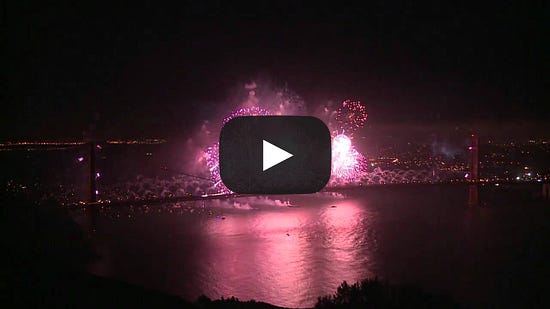
The event was a dazzling gathering, where we had the opportunity to rub elbows with San Francisco Mayor Ed Lee and numerous other dignitaries. It was an unforgettable evening, marked by a spectacular fireworks display looked like a cascade of diamonds falling from the bridge into the San Francisco Bay. This celebration was not just a commemoration of the bridge’s history, but a moment of collective joy and pride that I cherish deeply.
When I began discussing my personal experiences of suicide with my fellow board members at the Golden Gate Bridge, I discovered I was not alone in these tragic circumstances. I started counting the votes in support of using public funds to build the Suicide Net and realized juts how close we were in having a majority.
The campaign for the suicide net became a focal point of my tenure. It was more than a safety measure; it was a symbol of hope and a testament to the lives lost and affected by the bridge. The process was challenging, involving intense advocacy, funding searches, and rallying community support. The involvement of Assembly Member Tom Ammiano and the eventual use of toll funds were crucial milestones.
Just a week later that winter of 2013, only two months after I was forced to stepped down after losing my bid for re-election, my dear friend Ami Glass lost her husband Jonathan to depression at the Bridge.
In the midst of these challenges, I grappled with Premenstrual Dysphoric Disorder (PMDD), a severe and debilitating form of premenstrual syndrome. PMDD is characterized by intense emotional and physical symptoms that disrupt daily life, often leading to extreme mood swings and, in my case, suicidal ideation.
This cyclical battle felt like being shadowed by a ‘Dark Passenger,’ a term I borrowed from the TV series “Dexter.” This metaphor became a crucial coping mechanism for me. It allowed me to conceptualize the overwhelming and intrusive thoughts of self-harm as an external entity, separate from my core identity. By envisioning my PMDD-induced suicidal thoughts as a ‘Dark Passenger,’ I created a mental distinction between my true self and the intrusive, hormone-driven impulses.
This perspective was vital in managing my condition, providing a mental framework to distance myself from these harrowing thoughts and affirming that they did not define me. It was a strategy of survival and resilience, enabling me to navigate the darkest moments while maintaining a sense of self.
The close loss of Jonathan, Ami’s husband, broke something in me. I reached out to the Board and implored them to raise the money needed to build the net (then it was $45 million). I also wrote letters to every politician sharing my personal story of sitting with family members at the Bridge Board, my personal experience of friend’s loss, asking them to support Assembly Member Ammiano’s bill, AB 755.
Learning about how people have fixations, like the Golden Gate Bridge, in their suicidal ideation reading The Final Leap was insightful and helped me to see where I was ideating and how remove the fixation (selling my gas-powered car in 2013 for an electric so I couldn’t use it to asphyxiate myself in my garage) as a way to release the hold on me.
A sitting member of the Board lost his grandson to depression in 2014 as well. The surviving family members continued their pressure and the Board eventually approved using toll funds to implement the net.
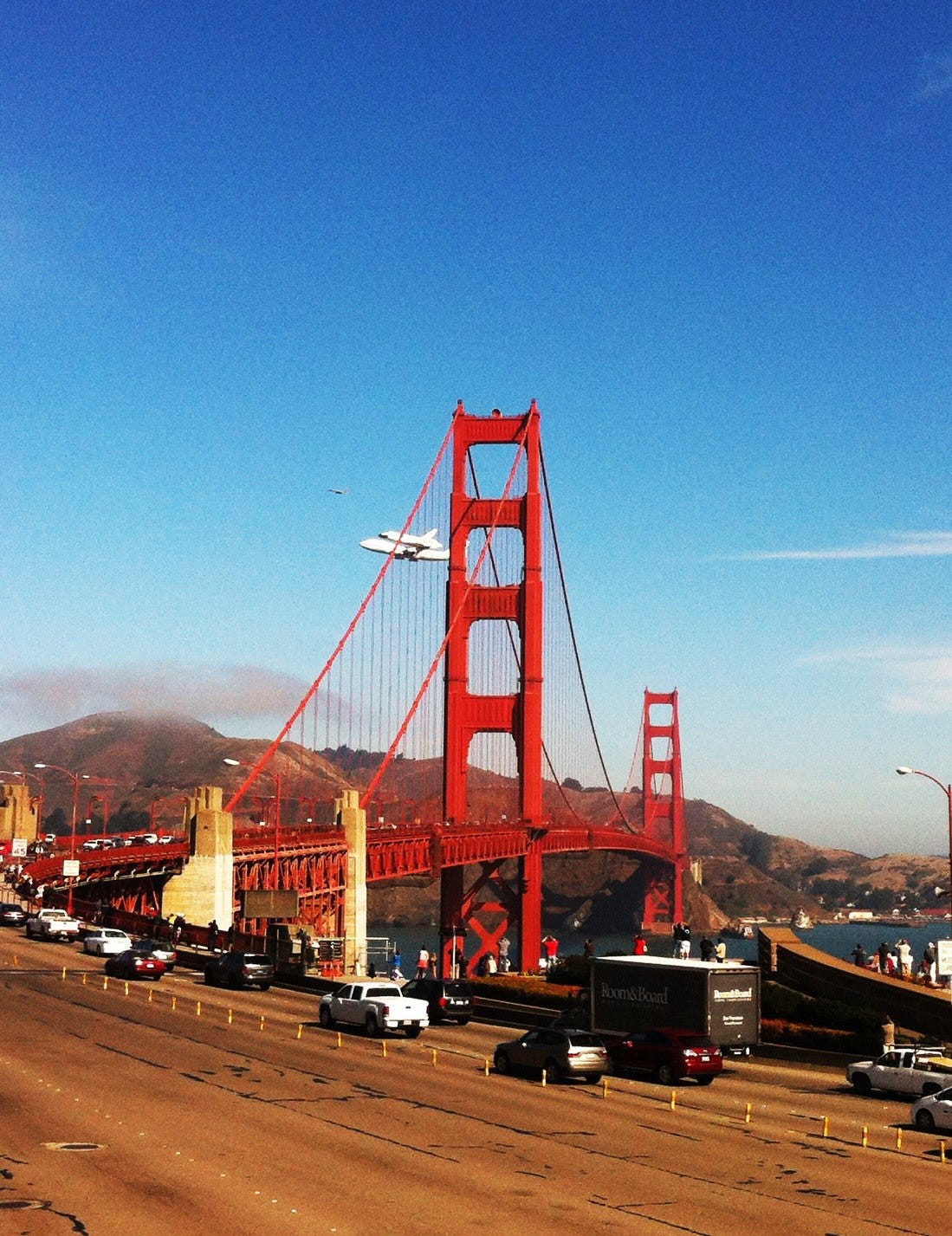
At of turn of the new year 2024, I saw several news articles that the suicide net was completed. And while the net will not save everyone, it will prevent loss of life for many. This completion brings a sense of closure for me and so many other survivors that I want to celebrate. Without their loss and bravery to confront a broken system, this net wouldn’t exist.
The completion of the suicide net, a monumental effort costing upwards of $224 million, represents a collective triumph over despair. It’s a barrier against tragedy and a beacon of hope for many. And this collective struggle led to the passing of AB 755 (Oct 2013) which would ensure all new or replaced bridges in California must include suicide barriers.
Reflecting on my path—from the depths of personal despair to the boardroom’s debates—I see my Golden Gate Bridge in a new light. It’s not just an icon of San Francisco but a symbol of our collective struggle against suicide and a reminder of the power of resilience and advocacy.
This journey, with its profound highs and lows, has been instrumental in shaping my approach to decolonizing time and liberating Flow states. The experiences at the Golden Gate Bridge, both harrowing and uplifting, have taught me the importance of redefining our relationship with time and space.
In decolonizing time, I learned to move away from a linear, productivity-focused mindset, embracing instead a more holistic, healing-centered approach. This shift was crucial in managing my PMDD and in navigating the complexities of political responsibilities and advocacy work.
Liberating Flow states became a practice of finding balance and harmony, even in the midst of chaos. It involved tapping into moments of deep engagement and creativity, whether in labor negotiations, crafting policy, or strategizing for the suicide net. These Flow states allowed me to channel my experiences, both personal and professional, into meaningful action. They became a source of strength, enabling me to advocate effectively for change and to support others in their struggles.
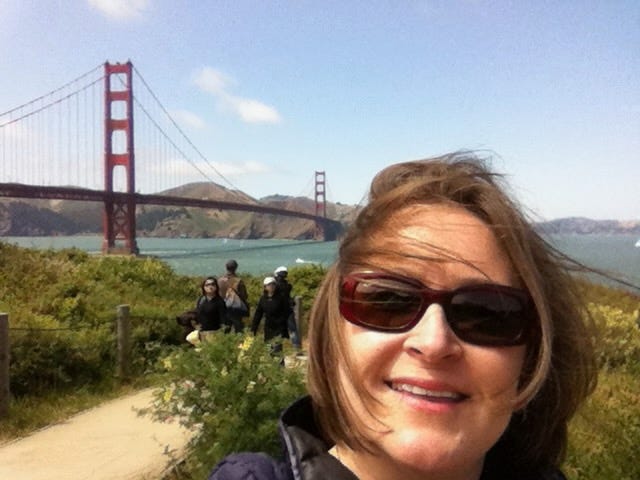
As I reflect on the passage of AB 755 and the completion of the suicide net, I see them as not just triumphs of advocacy but also as manifestations of these liberated Flow states. They stand as reminders that even in the darkest times, we can find ways to transcend our circumstances, connect deeply with our work, and contribute to a greater good. The Golden Gate Bridge, once a symbol of personal and collective pain, now also represents the possibility of transformation and the power of resilience.
Stay wild, love fiercely. Your presence is golden.
With stardust and celestial love ✨🪐💫
xo Ixchel
P.S. Citing is a feminist and decolonial power move (/ht to Kelly Diels for making that an anthem). If you’ve gained insights and shifts from my work, please remember to cite me and share Dragon 🐉 Letters with a friend. Not citing is a form of epistemicide.
🌒 Get your Moon Phase (free calculator) →
✍🏽 Meet OoSo Studio →
👩🏽🤝👩🏾 Ways to work with me…
🎙️ Book me for your Podcast, speaking event, or program…
Walk in beauty. Live your magic. Go wild.
Your Sanctuary to Cultivate Wild Presence for Thriving with a Planet in Transition
I was raised and bore children on the traditional, unceded, and stolen lands of the Coast and Central Valley Miwok (colonized as Petaluma, CA) and Nisenan (colonized as Sacramento and Fair Oaks, CA), past, present, and future. I also write, work, and live in the highland forest of the traditional, unceded and stolen lands of the Totonac, Nahua, and Mexicah, past, present, and future, in what is known as Coatepec, Veracruz, Mexico.
P.P.S. I do not live or consent to the colonial impositions regarding the construct of Time. I also practice honoring rhythms of work, play, and rest so that I can serve you with embodied presence and with loving care. This means I may take several days to respond to your requests and questions. (h/t Eva Glamaris)
P.P.S. A mention is not necessarily an endorsement of someone. It’s an acknowledgment, a citation, of the origin of information in my process of understanding. (h/t Kelly Diels)
Thanks for reading! If you loved it, tell your friends to subscribe.
We may include other affiliate links in our content. Thank you for supporting our work.
Copyright © 2026, Cheyenne, WY, and Veracruz, Mexico, All rights reserved. Sharing your lineage of knowledge is decolonial. When iterating, please cite me. Not citing is epistemicide.
