Dragon 🐉 Letter #79 The night sky spoke in a flash of starlight — join me on a reneage, punk-Indigenous journey to rediscover our cosmic kinship and re-enchant the world. 🌌🔮

A Few Tidbits
The Contract Shop is having a sitewide 25% off sale with code SUMMER24
Funnel Gorgeous Funnels is what I use for everything (except Substack). If you’re exploring moving your website and sales/landing pages, I can help with that! I’m certified Master Marketer with over 3 years experience working with and building client websites in FGF. It’s an amazing all-in-one tool.
(Affiliate links help me cover business costs, thank you for supporting me!)
Typically, a piece this long would be reserved for our Founding Members only. But because it’s such adeep exploration of my philosophy and epistemology, I am making it available to all, and including it as an audio essay. Enjoy!
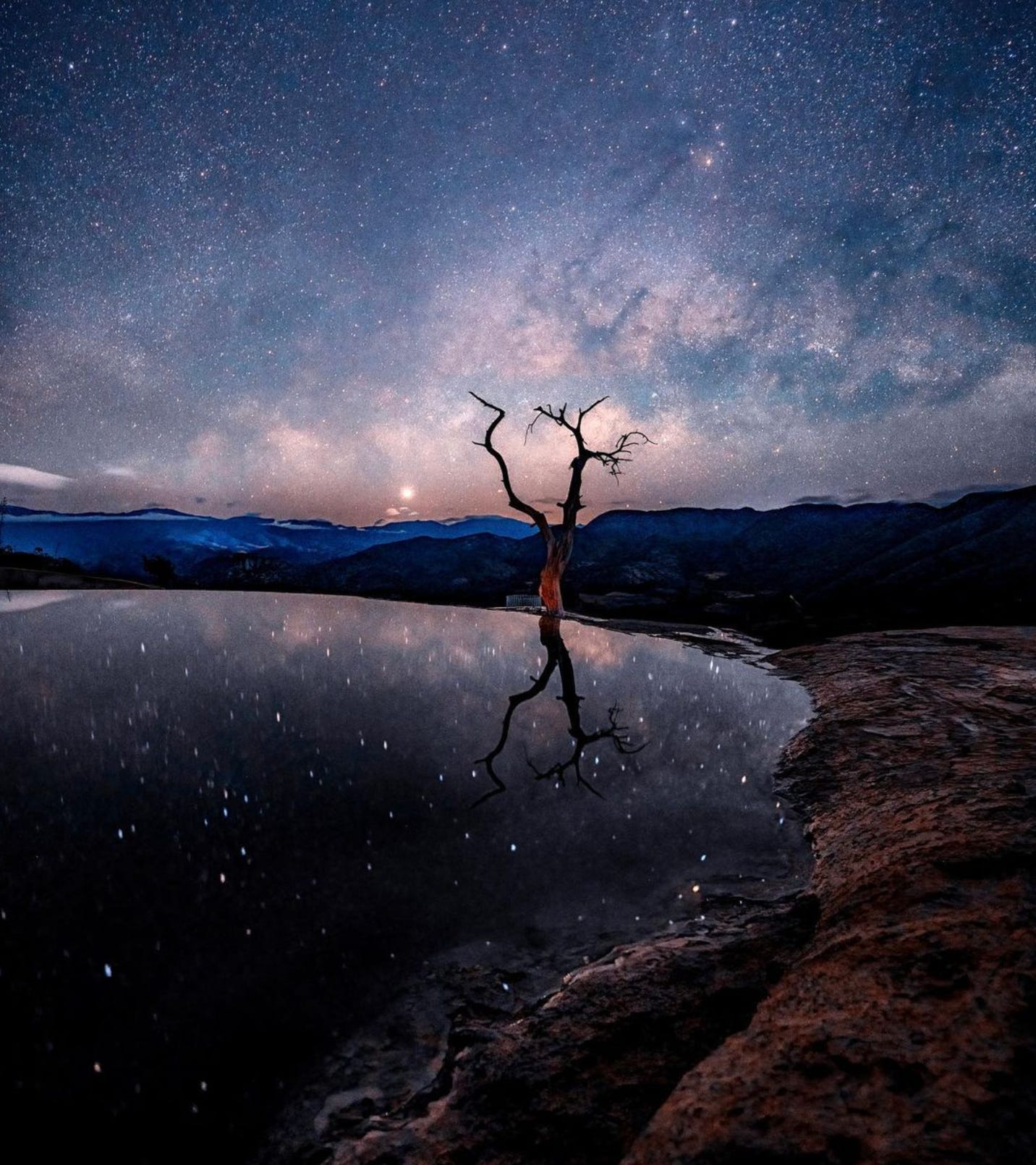
🎧 You can listen to me speak this Dragon Letter in an Audio Essay here:
 Listen now · 20:05
Hola Beautiful Wildlings!
Early Monday morning when it was still dark I awoke to go to the bathroom. I noticed a bright star wink and flash. Instinctively I knew it was a binary star, but without my glasses I wasn’t sure. Then I saw Jupiter and Mars in their last dance this time around.
It was so bright from the near-full moon the bedroom curtains were lit up.
I went over to see the moon and heard a familiar night bird I’ve often heard in my sleep. I grabbed my phone to do a Merlin sound recording to see if I could learn what it was. It’s known as the guabairo chico here, or Mexican Whip-poor-will, number 75 on my life list while living south of the US. I have a paper list from US bird sightings in my Audubon Field Guide in storage.
I opened the Planets app to see what star winked at me, as only the brightest stars were visible in the misty sky. Capella is a bright, flashy green-blue double binary star system. I knew it.
Binary stars are so lovely. They twinkle in our atmosphere as the particles and our feeble eyes play tricks on us. When I was astronomy lab teaching assistant, I would have students take photos of binary star systems
using astral-photography.
As I lay in bed trying to get back to sleep, I reflected on my time under the stars. I spent all of 1994 as a TA, teaching students the constellations and how to use telescopes to identify objects and take photos (using film cameras).
I was so good at using the telescope that in one night I was able to find a record amount of Messier objects, and on a very special evening was able to see every single planet in the night sky — all the way up to Pluto, which I had to document over several days in order to know where it was exactly within the field.
Students would spend hours focusing their field, making minuscule adjustments to the telescope position to hold the focus while the film gobbled up the light. Days later they would get their film back from processing to see how they did. By then our two-weekend sessions were over. Many I never saw again.
But occasionally, I would receive a card and duplicates of their photo work, with a note of gratitude about how our time together changed how they viewed the cosmos and their lives.
For two weekends each month, we would bring a couple dozen students up to Lake Sonoma to camp. Over that year, I was able to see the whole sky. And that July I witnessed the magnificent comet Shoemaker-Levy 9 approach and merge with Jupiter.
Words cannot express the deep gratitude I have for Jupiter, seeing firsthand how its massive size pulls comets and asteroids to it, protecting the inner planets from likely annihilation.
I was minoring in Astronomy. However, with a heavy background in astrology, I constantly tried to get my professor to see the world differently. Astrology was always shit on at some point during each lab. And we would go back and forth about it on the drive out to Lake Sonoma.
Without getting into astrology, in my renegade, punk-Indigenous way, I would share my relationship to the planets in a more kinship view to expand how my students engage with the cosmos. Those cards I received were affirmations that I left a lasting impact on them.
As much as the experience of astronomy lab left its indelible mark on my soul, I realized that year I would not be able to continue my education in astrophysics. I was in the middle of a prolonged divorce and custody negotiation. Sonoma County had a law that would mean giving up custody if I moved out of the county to attend college.
Without any strong women in STEM to coach me on possibilities, outcomes for Black and Brown women in science were not great at that time. Energetically, I had to pick my battles and keep custody of my kids however I could.
Relational and Kinship Astrology
In the dominant narratives of science and astronomy and critique of astrology, there’s often an underlying assumption: that the cosmos is nothing more than a collection of distant, dispassionate objects spinning in a void—mere data points to be measured, analyzed, and categorized.
It’s not that the universe is a cold, lifeless expanse; it’s that colonized Western thought has taught us to view it that way.
But in my renegade, punk-Indigenous way, I’ve always resisted this reductionist view. My relationship with the planets, the stars, and the moon has always been one of kinship — a deep, living connection that defies the cold, clinical gaze of traditional astronomy.
My relationship with the Cosmos has never been about dissecting it into parts; it’s been about understanding it as kin, as family. In many ways, as part of my larger chosen queer family. These celestial bodies are not mere rocks and gases light-years away; they are relatives, each with stories, wisdom, and a pulse that we can feel if we’re quiet enough to listen.
It’s not that the stars are distant and indifferent; it’s that a colonized mindset has conditioned us to see them that way.
Relational astrology — an approach that defies the cold gaze of traditional astronomy and astrology and invites us to step into a more intimate connection with the universe.
This kinship view is a radical departure from the mechanistic approaches that dominate much of modern science. It encourages us to go beyond the confines of charts and data and, instead, to open ourselves to a more intimate connection with the universe by engaging in a dialogue with the Cosmos.
When I am daily communing with the planets, I’m not just observing them as something separate; I’m in dialogue with them, learning from their movements, their rhythms, and their dances across the sky to see how they connect with my own imprint from them.
This is relational astrology — an astrology that nurtures belonging and reminds us we are part of a vast, interconnected web of life. Through this lens, the night sky isn’t a distant, unreachable mystery; it’s a vibrant, ever-present conversation.
The stars don’t just twinkle — they wink, they flirt, they beckon us to remember that we’re all part of this cosmic story.
And when we view the Cosmos through this relational lens, we begin to queer and re-enchant our world. The planets aren’t just objects to be studied; they are guides, teachers, and companions on this journey. They have lessons to share if we’re willing to meet them in kinship, to honor the stories they carry, and to recognize the threads that connect us all.
In teaching my students, I aimed to share this view — to show them that the sky isn’t something to conquer and capture with telescopes and cameras but a living tapestry we’re woven into. Those cards and notes I received were affirmations that, for some, the stars had shifted from distant points of light to intimate parts of their lives, as they had for me. This shift isn’t just about seeing the stars differently — it’s about living differently — queerly — understanding that our relationship with the Cosmos mirrors our relationship with the Earth, with each other, and with ourselves.
Decolonizing Astronomy and Astrology
Academia has always had a way of boxing in knowledge, drawing hard lines between what’s considered legitimate and what’s dismissed as superstition. Astrology, with its lineage in Indigenous epistemologies, geo-cosmovisions, and origin stories, often finds itself on the wrong side of that line, ridiculed, sidelined, deemed unworthy of serious consideration.
I know this tension well — not just from my time in the astronomy lab, where the cold, sterile methods of science clashed with the warm, breathing wisdom of the stars that I carried in my bones, but also from my years at the California Institute of Integral Studies (CIIS). There, ahead of my time, in the heart of a place that prides itself on integrating diverse ways of knowing, I still found myself at times locking horns with my professors in Philosophy and Cosmology.
Colonized Western thought, with its firm grip on what our relationship with the Cosmos could be, permeated even this supposedly open-minded space at the turn of the 21st century. Every time I tried to bring in the historical and ancestral wisdom from my Mayan ancestors to share their geo-cosmological view, I was met with skepticism and demands for proof and evidence. It was as if the very act of questioning their rigid epistemology caused discomfort, as though the idea that the Cosmos is still alive through these more ancient relational and spiritual traditions was too wild, too untamed for the confines of Western thought.
In those classrooms, I felt the weight of an enchantment so confined, so limited, yet yearning to know more. There was this underlying tension, a push and pull between the expansive, relational view I held and the reductionist, analytical lens that sought to dissect and categorize everything into neat little boxes.
The questions they asked — questions of proof, of empirical evidence — were attempts to reduce a rich, living cosmology to something they could measure and control. But the Cosmos doesn’t fit neatly into those boxes, and neither does the wisdom of my ancestors.
Decolonizing astrology isn’t just about pushing back against academic gatekeeping; it’s about dismantling the entire framework that deems certain ways of knowing as valid while erasing others. It’s about reclaiming the knowledge that was dismissed, not because it lacked truth, but because its queering didn’t fit within the narrow confines of colonized Western thought.
When I reflect on my time under the stars and in those classrooms, I recognize that these two worldviews — the scientific and the Indigenous — don’t need to be in conflict. But let’s be clear: they are not equal, and they don’t exist on the same playing field. Indigenous worldviews have been systematically suppressed, and it’s time to honor and elevate them, not merely as a complement to the scientific, but as powerful, sovereign ways of understanding the Cosmos in their own right.
In decolonizing astrology, we aren’t just adding new layers to an old practice; we’re peeling back those layers to reveal the deep, ancestral wisdom that has always been there while also weaving new worlds.
We’re re-integrating the spiritual significance of celestial events — like Jupiter’s protective role, which I’ve witnessed firsthand, not as a relic of the past, but as a beacon for Indigenous Futures.
In this emerging cosmology, planets aren’t just massive bodies of rock and gas; they’re Capital B Beings with intentions, guardians of equilibrium, and keepers of stories that continue to evolve and shape our lives. They guide us not only through the wisdom of our ancestors but also as allies in our collective journey toward a future where Indigenous knowledge and relational ways of being are central to our understanding and experience of the Cosmos and life on this planet in transition.
Bringing ancestral wisdom back into contemporary practice is an act of reclamation, an affirmation that our ways of knowing are not just valid but vital. It’s a reminder that the stars and planets have always spoken to us in a primordial language that predates telescopes and textbooks.
It’s about recognizing that this wisdom doesn’t just belong in the past; it’s a living, breathing force that can guide us in our present planet in transition towards our re-indigenized future. By embracing a decolonized and queer approach to astrology, we create space for a cosmology that is relational, spiritual, and deeply, deeply connected to the land, the sky, and all our relations.
Meaning-Making, Queering, and Re-enchanting Ourselves and the Cosmos
Astrology, when viewed through a decolonized lens, flips astrology on its head to become more than a mere tool for predicting events or categorizing personalities — it becomes a profound way of meaning-making. It’s a way of locating ourselves within the vast, ever-unfolding, dare I say queer narrative of the Cosmos.
It helps us understand that we are not just passive observers in this universe but active participants in a story that is as old as the stars themselves. Each planet, each constellation, each celestial event carries a message, a whisper from the cosmos inviting us to step into our true path, to see ourselves as part of a larger whole, as we are literally made of stars.
I think back to the cards and notes I received from my students after those long weekends under the stars. They often shared how our time together had shifted something within them — how learning to see the sky differently had changed how they saw themselves. Those cards were more than just expressions of gratitude; they were affirmations of the transformative power of a renegade, punk-Indigenous astrology.
In teaching them to connect with the Cosmos in a relational way, I also taught them to connect more deeply with themselves and find meaning in the patterns above that reflected the patterns within.
This is the true gift of a decolonized astrology: it allows us to see the Cosmos not as something separate from us, but as a mirror, a guide, a teacher. It’s about moving beyond the reductive, deterministic interpretations and embracing a view of the stars that is fluid, alive, and deeply interconnected with our personal journeys. When we engage with astrology in this way, we open ourselves to a richer, more nuanced understanding of our place in the universe.
We begin to see our lives as part of a greater tapestry woven together with the threads of starfire and earth.
My own journey with the stars has been one of constant evolution, shaped by the experiences that have led me to where I am today. That pivotal year in the astronomy lab, while challenging in many ways, was also a year of profound realization.
I learned that the Cosmos wasn’t just something to be studied — it was something to be lived, to be felt in the marrow of my bones, to be embraced as a part of who I am. That realization has continued to guide me, reminding me that the stars are not just distant points of light, but intimate parts of my own story.
Jupiter’s love forever changed how I see the world and our solar system.
Trying to convey that to my professors at CIIS, that Mayans knew thousands of years before Eurpoean astronomers, and understood the Earth is part of a solar system AND the Milky Way Galaxy (tree of life), not the center, was just too much to for them to conceive. But those were early days of our understanding of Mayan cosmologies. Later they would know what I had always felt.
Through this relational, decolonized lens, the stars become partners in our personal transformation. They invite us to step into a deeper relationship with ourselves and the world around us. They remind us that we are not alone, that our struggles, our joys, our sorrows, are all part of the cosmic dance. And in this dance, we find meaning, we find purpose, we find the courage to queer and re-enchant the world, one star at a time.
Choose Your Cosmic Adventure
As we come full circle, I invite you to step outside tonight, look up at the night sky, and let yourself feel the quiet pulse of the Cosmos, and see it not just as a distant expanse, but as a living, breathing part of your own story.
What do you feel when you gaze at the stars?
What whispers do you hear from the Cosmos, inviting you to explore a deeper connection, to re-enchant your view of the world?
What stirs within you as you gaze at the stars, as you sense the planets weaving their ancient stories through the sky?
Who is there winking back at you?
The night is alive with possibility, inviting you to explore your own relationship with the universe.
The stars have always been there, waiting for us to listen, to engage with them not as something separate but as part of our larger kinship network. In my tradition, stars, like the Pleiadies, are where we came from before Earth.
They hold the keys to our stories, our histories, our futures — if only we give a moment to listen, to see, to feel. How might your life shift if you approached the Cosmos with a sense of kinship, of relational belonging? What new meanings might emerge? How might your life transform if you allowed the Cosmos to guide you and re-enchant your world with its wisdom?
If you’re feeling called to set out on a journey with the stars, I invite you to choose your own cosmic adventure in working with me:
Start Your Journey: If you’re new to this way of connecting with the cosmos, begin by exploring the foundational practices that can open up a world of meaning and connection through Time Weaversdaily practices or the 10-module course Befriending Time.
Deepen Your Connection: For those who’ve already begun their cosmic journey, let’s dive deeper together — uncovering the layers of wisdom that the stars hold for you in Stellar Impression™ Mentorship or a Stellar Astro/HD session.
Transform Your World: Ready for a profound shift? In the Wild Presence container, we can work together to integrate this cosmic wisdom into your life, transforming how you see the world, your creative Flow, and your place in Cosmos, all while deepening your revolutionary leadership through your brilliant rhythm and Flow.
You can explore these options and more by visiting this page. Whichever path resonates with you, I’m here to support your journey.
The Cosmos is vast and full of wonder, and you don’t have to navigate it alone. When you’re feeling called to explore your relationship with the Cosmos in a more intimate, transformative way, I would love to journey with you.
Together, we can dive deeper into the wisdom of the stars, uncover the threads that connect your life to the greater cosmic tapestry, and re-enchant your world.
Stay wild, love fiercely. Your presence is golden.
With wild and rebellious love,
Ciao! xo Ixchel
🌒 Get your Moon Phase (free calculator) →
✍🏽 Meet OoSo Studio →
👩🏽🤝👩🏾 Ways to work with me…
🎙️ Book me for your Podcast, speaking event, or program…
Walk in beauty. Live your magic. Go wild.
Your Sanctuary to Cultivate Wild Presence for Thriving with a Planet in Transition
I was raised and bore children on the traditional, unceded, and stolen lands of the Coast and Central Valley Miwok (colonized as Petaluma, CA) and Nisenan (colonized as Sacramento and Fair Oaks, CA), past, present, and future. I also write, work, and live in the highland forest of the traditional, unceded and stolen lands of the Totonac, Nahua, and Mexicah, past, present, and future, in what is known as Coatepec, Veracruz, Mexico.
P.P.S. I do not live or consent to the colonial impositions regarding the construct of Time. I also practice honoring rhythms of work, play, and rest so that I can serve you with embodied presence and with loving care. This means I may take several days to respond to your requests and questions. (h/t Eva Glamaris)
P.P.S. A mention is not necessarily an endorsement of someone. It’s an acknowledgment, a citation, of the origin of information in my process of understanding. (h/t Kelly Diels)
Thanks for reading! If you loved it, tell your friends to subscribe.
We may include other affiliate links in our content. Thank you for supporting our work.
Copyright © 2026, Cheyenne, WY, and Veracruz, Mexico, All rights reserved. Sharing your lineage of knowledge is decolonial. When iterating, please cite me. Not citing is epistemicide.
