The reflection essay and image galleries are probably too long for your email client. Please enjoy the full reading experience on Substack.
Loving Reminder: Time Weavers Founders Opening Week — with introductory pricing of $11/mo and ongoing access to the library — ends tomorrow —> https://timeweaverscollective.com/
🌌🌿 Step into Time Weavers, where somatic, mycelial, and transgressive creativity thrives. Connect with Earth’s rhythms, achieve Flow states, and amplify your impact through daily rituals. This is your sanctuary for revolutionary leaders, creatives, and visionaries. 🌿✨
Here’s a sneak peek practice from Week Ø: Mycelium & Soil: Rooting into this Work
Day 2: The Importance of Soil Health
Practice: Walk barefoot on the Earth or sit quietly with your hands in the dirt. Feel the textures and temperatures, and consider how the soil supports and sustains all life.
Writing Prompt: Describe a place that feels grounding and safe. What elements contribute to this feeling of rootedness?
Hola Creative Wildlings,
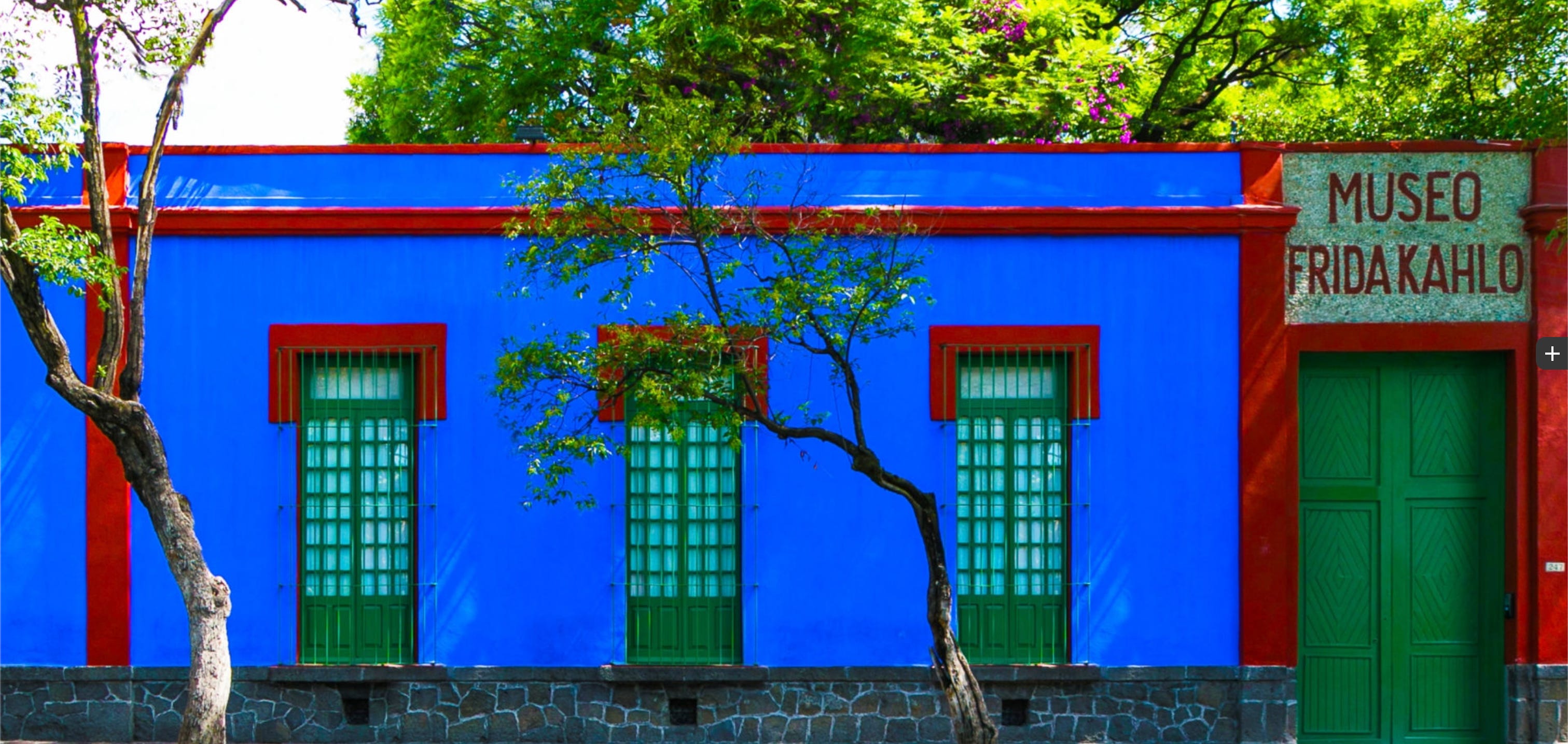
I recommend listening to Chavela Vargas’s rendition of La Llorona while enjoying this Dragon 🐉 Letter as you feel into my reflection and exploration of La Casa Azul, where Vargas fell in love with Frida Kahlo.
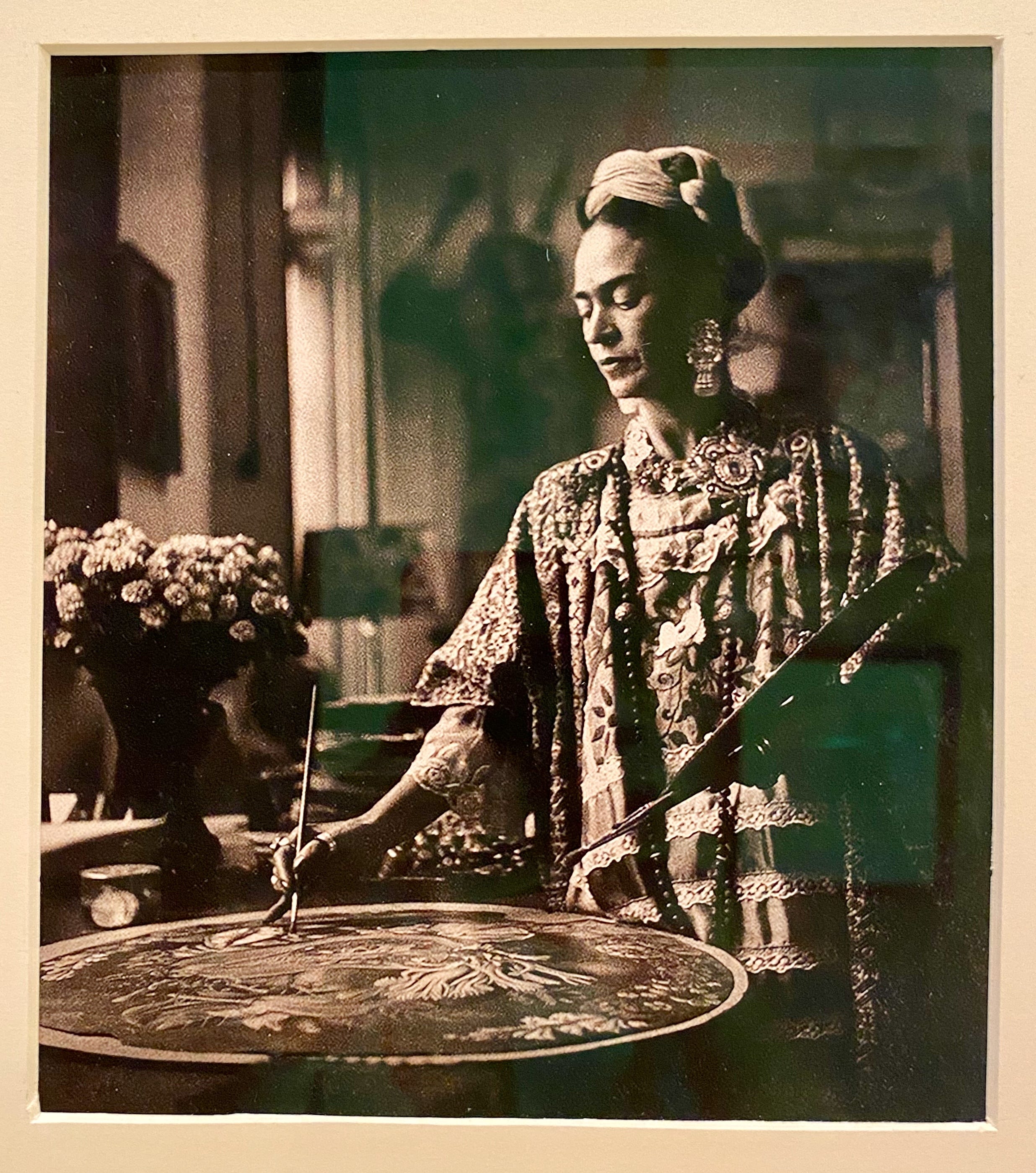
Frida Kahlo’s life was an acute tapestry of pain, passion, and creativity. Born as Magdalena Carmen Frida Kahlo y Calderón in 1907 at La Casa Azul, Mexico City, she was raised in the vibrant yet turbulent environment of post-revolutionary Mexico.
In addition to surviving Polio, which left her with a shortened leg, severe injuries from a bus accident in 1925 brought physical agony and dozens of surgeries. They would become another massive influence on Kahlo’s art and personal philosophy.
Kahlo’s work, like her eyebrows, will more often than not cross the thin line of the transgression of either/or ruffling traditional definitions in the themes of identity, gender, and sexuality. There are numerous mycelial connections in Kahlo’s works—organic, fragile links allowing light to shine on the deep entanglement between her body, nature, and the cosmos.
One need only think about her use of botanical imagery and how she wove her physical experiences into bold creative expression. In her art, she attempted to express those hidden and often fugitive aspects of her identity and pain, giving form to her inner life.
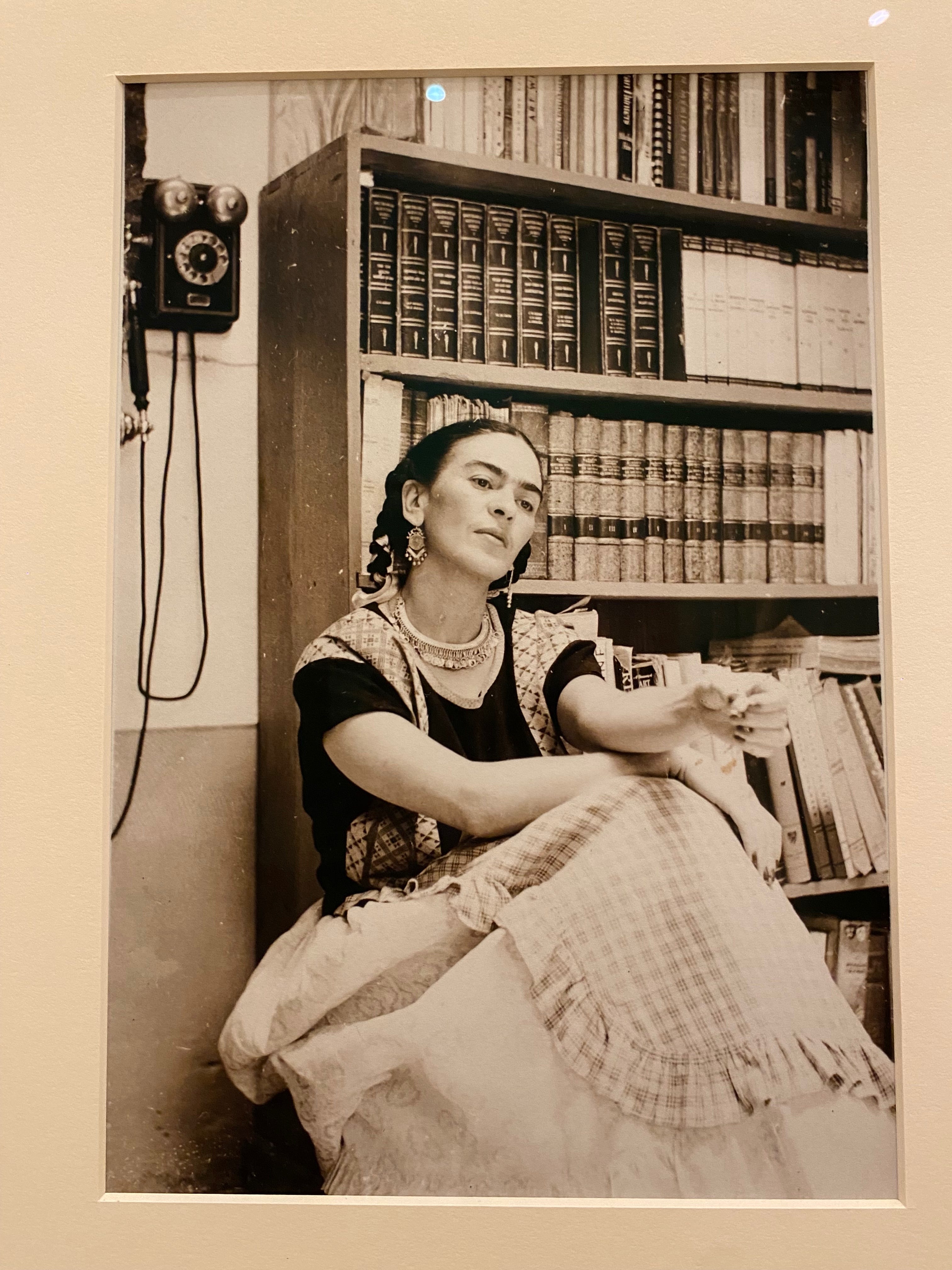
Themes of pain and somatic art are central to Kahlo’s oeuvre. Her body, as a source of suffering and a vessel for her creative expression, is repeatedly depicted in her work. Works like “The Broken Column” and “Henry Ford Hospital” graphically illustrate her physical torment and emotional anguish, through which she transformed her pain into a potent, visceral form of art.
Frida’s relationships also defied conventional norms. Even her relationships were nothing short of extraordinary. Her marriage to the renowned muralist Diego Rivera was a complex blend of mutual admiration, infidelity, and artistic collaboration.
Rivera, 20 years her senior, was both a mentor and a muse. Their tumultuous relationship mirrored the chaotic beauty of Kahlo’s art. However problematic their relationship was, their bond undeniably influenced her artistic development.
Apart from her marriage with Rivera, Frida’s life was punctuated by passionate relationships with women. She embraced her bisexuality openly at a time when such topics were taboo. Her sapphic loves included notable figures like the singer Chavela Vargas, who would enrich not only her understanding of love and intimacy but also influence further works and her personal narrative.
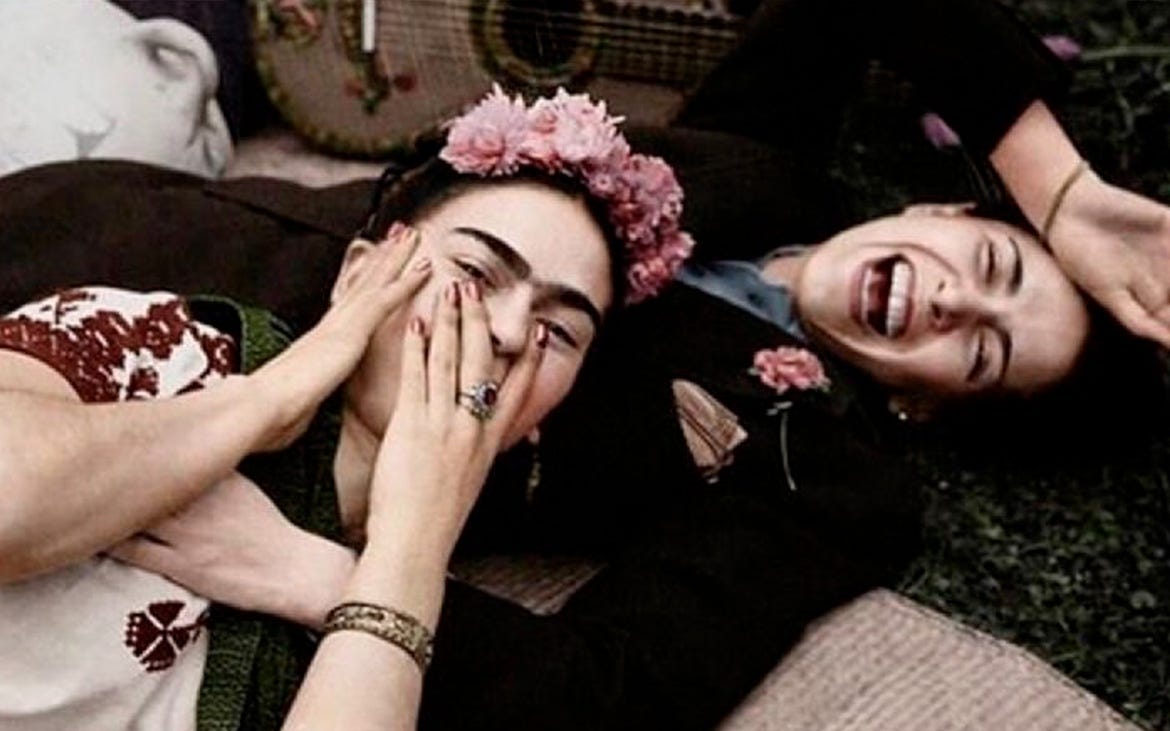
The story of Chavela Vargas and Frida Kahlo’s love inspires the highest. The renowned singer with a deep, soul-stirring voice loved Kahlo without hiding. Their relationship was short-lived, yet both women would never forget this experience.
Chavela Vargas moved into La Casa Azul, sharing intimate moments with Frida in her home’s vibrant, artistically charged environment. However, despite the depth of their connection, Frida’s complex relationship with Diego Rivera kept her from fully committing to Vargas. This unrequited love left Vargas heartbroken, and she eventually had to leave La Casa Azul.
This heartbreak found its voice in Vargas’ haunting rendition of La Llorona, a traditional Mexican folk song that tells the tale of a bereaved woman mourning her lost love and children. The song has been a part of Mexican culture for centuries, symbolizing profound sorrow and the pain of betrayed love. I grew up hearing my grandparents and friends, gorged on spirits, singing La Llorona during lively yet wistful gatherings. Vargas’ performance of La Llorona, dedicated to Frida, is one of the song’s most evocative and soul-wrenching interpretations, imbued with her own emotional pain and longing.
In her rendition, Vargas captures the essence of La Llorona with a raw, emotional intensity that resonates deeply with anyone who listens. The “chunca” Vargas sings of means one without a limb, as Frida was at the end of her life.
The song’s lyrics of love, loss, and longing mirror the sorrow Vargas felt over her separation from Frida. The refrain, “Ay, de mi Llorona, Llorona de azul celeste,” evokes the same deep, celestial blue that adorns La Casa Azul, tying the song, the place, and the emotions together in a soulful, mycelial connection.
With Vargas’ singing of “La Llorona” in her rendition, the voice seems to reveal much more than just a piece of music — hear even now how Vargas, in her later years, weeps over her own queer grief of her great love for Frida and the suffering from their separation into Mexico’s art, etched with personal history in the sweetest, subversive cultural narration.
Captured in the theatrical 2002 biopic Frida, directed and starring Salma Hayek, the real-life Chavela Vargas would sing La Lorna to Hayek in an epic, sapphic bar scene.
Vargas’s take on La Llorona, dedicated to Frida, is a masterpiece that reminds us how deep the power of love and art can express human emotions. It’s a bright and melancholic tribute to unfulfilled love, yet it lives on in the haunting notes of a timeless song.
La Casa Azul is now the Frida Kahlo Museum in Mexico City, uncanny proof of her extraordinary life. The museum offers a glimpse into her world, preserving her personal belongings, artwork, and the vibrant blue walls of her home.
The space seemed animated by the spirit of her creativity, resilience, and profound interconnection with the world around her. It embodies the organic growth of her legacy, like a mycelial network, spreading her influence onto the fertile ground of art history and contemporary culture.
The deep, vibrant cobalt-ultramarine blue of La Casa Azul is even claimed to be a symbolic and cultural color. It is so unique to the Coyoacán neighborhood of Mexico City that it has been given the name “Mexican blue” or “Frida Kahlo blue.”
This deep, intense blue is prevalent throughout Mesoamerica, symbolizing various aspects of the region’s rich history and culture. It is often associated with the sky and water, representing the heavens and life-giving resources.
For me, it came to represent my first days in Managua, Nicaragua, when I stayed at an Airbnb called Casa Azul to purchase furnishings for my new home in the highland jungle of Matagalpa. Later, it was the color of the doors and trim of the sweetest place I’ve ever lived. Then, several years ago, it would be the backdrop color of the house we stayed at in Oaxaca as we scouted our future move to Mexico, interrupted by the pandemic.
Whenever I see this blue, it takes my breath away.
Another well-known artist with a loving connection to this electric blue, a Nicaraguan poet who belonged to the modernismo literary movement, was Rubén Darío. In his verses, Darío constantly praises the topics of nature, spirituality, and oneness with the world, using color as a symbol to evoke connection. The Azul of Darío came decades before Frida’s La Casa Azul; his works narrate a familiar adoration for the deep, near-mystical qualities of color and nature.
In his poem Azul…, Darío uses the color blue to evoke a sense of ethereal beauty and transcendence. This poem, part of his collection also titled “Azul…”, captures the essence of the color’s significance in Mesoamerican culture. Here, blue symbolizes the infinite, the divine, and the connection between the earthly and the celestial.
In the same way, how very blue La Casa Azul is compared to Darío’s poetic use of blue brings out the common cultural heritage that lies in Nepantla, betwixt and between borders. Words and art with a shared understanding of the embodied experience of color in Mesoamerican and Latin American art and literature.
Kahlo and Darío, through their respective medium, used blue to communicate this mycelial connection with their roots, pain, and transcendent visions deeply down. Relating to cultural and spiritual symbolism through using the color blue for La Casa Azul, where, vis-à-vis Frida Kahlo, it became her canvas projection of pain, passion, and creativity and becomes cemented in Vargas’s heart as she sings of her torment in La Llorona.
La Casa Azul, with its striking blue walls, thus becomes a personal sanctuary for Frida Kahlo and a symbol of her broader cultural and artistic endowment. The mycelial threads of history, art, and identity are woven into this living tapestry, breathing spirit and inspiration into those visiting and studying its rich heritage.
Going to La Casa Azul is more than seeing into Kahlo’s life and work; it is an immersion into the fabric of her existence, where ideas on pain, love, and creativity are interwoven in the vivid huipil threads of her legacy.
Stay wild, love fiercely. Your presence is golden.
With wild and rebellious love,
xo Ixchel
P.S. Curious to dive deeper into the wild edges of creativity and existence and be like Frida? Step into Time Weavers at the introductory price this week where we dream wildly, create boldly.
Share Dragon 🐉 Letters from Ixchel Lunar
🧵 I’m on Threads (where I’m sharing my favorite TikToks, musings, and links there too)!
👩🏽🤝👩🏾 Ways to work with me…
🎙️ Book me for your Podcast, speaking event, or program…
💸 If you enjoy these posts, please support them by becoming a paid subscriber.
🌒 Get your Moon Phase (free calculator) →
✍🏽 Meet OoSo Studio →
👩🏽🤝👩🏾 Ways to work with me…
🎙️ Book me for your Podcast, speaking event, or program…
Walk in beauty. Live your magic. Go wild.
Your Sanctuary to Cultivate Wild Presence for Thriving with a Planet in Transition
I was raised and bore children on the traditional, unceded, and stolen lands of the Coast and Central Valley Miwok (colonized as Petaluma, CA) and Nisenan (colonized as Sacramento and Fair Oaks, CA), past, present, and future. I also write, work, and live in the highland forest of the traditional, unceded and stolen lands of the Totonac, Nahua, and Mexicah, past, present, and future, in what is known as Coatepec, Veracruz, Mexico.
P.P.S. I do not live or consent to the colonial impositions regarding the construct of Time. I also practice honoring rhythms of work, play, and rest so that I can serve you with embodied presence and with loving care. This means I may take several days to respond to your requests and questions. (h/t Eva Glamaris)
P.P.S. A mention is not necessarily an endorsement of someone. It’s an acknowledgment, a citation, of the origin of information in my process of understanding. (h/t Kelly Diels)
Thanks for reading! If you loved it, tell your friends to subscribe.
We may include other affiliate links in our content. Thank you for supporting our work.
Copyright © 2026, Cheyenne, WY, and Veracruz, Mexico, All rights reserved. Sharing your lineage of knowledge is decolonial. When iterating, please cite me. Not citing is epistemicide.
